


1931–1932
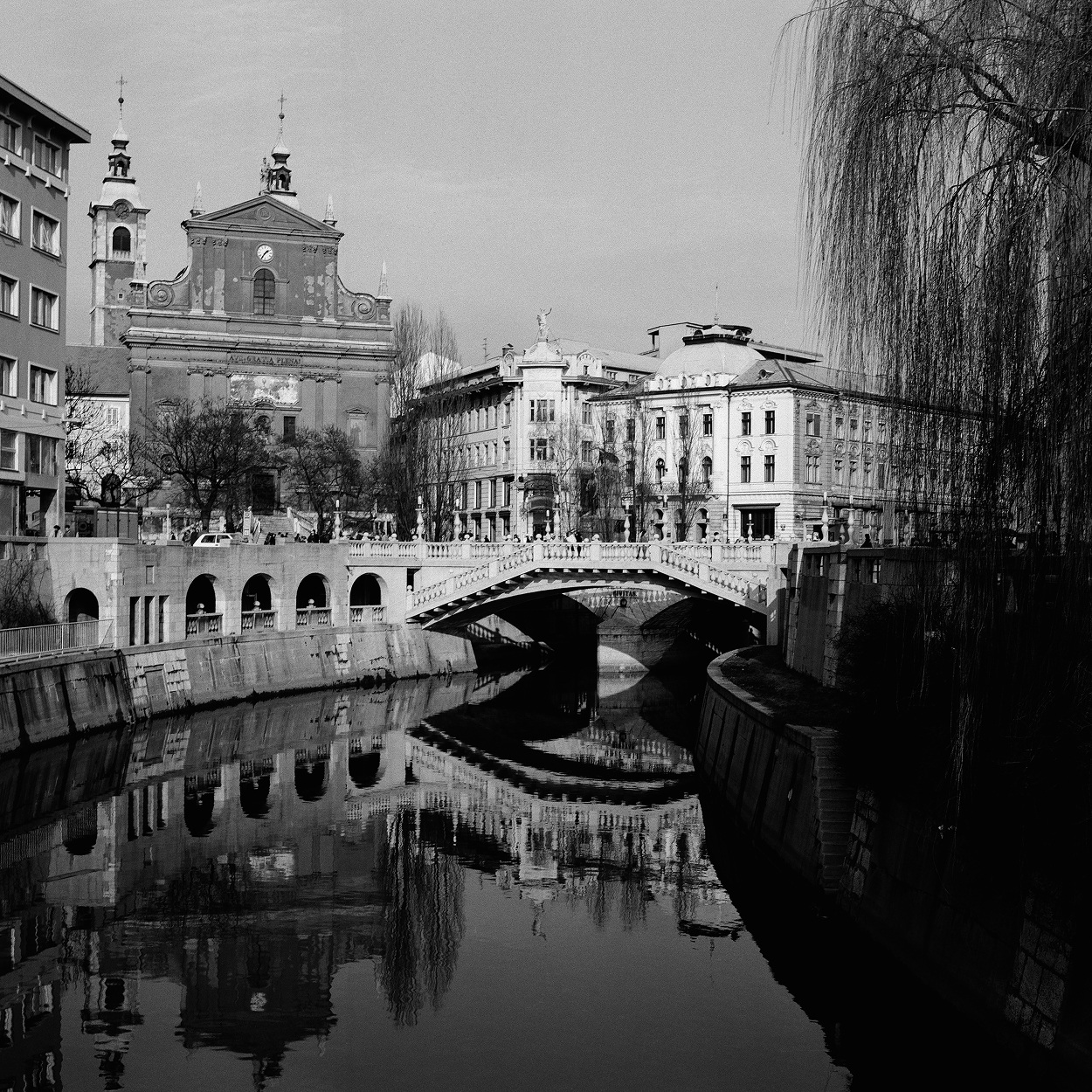
A master of small-scale urbanism, Plečnik designed the Three Bridges so as to revitalise the existing space by transcending the mere utilitarian function of the bridge and transformed the new ensemble into one of the city’s most vibrant hubs. The Three Bridges was a response to Ljubljana’s intensifying urbanisation. The existing stone bridge, which at the time accommodated a tramline, became too small for the growing city and its traffic needs. Rather than demolishing the stone bridge, Plečnik proposed extending it by adding two new pedestrian bridges, one on each side of the old one. This allowed him to maintain the historical integrity of the site and enhance it with new functionality.
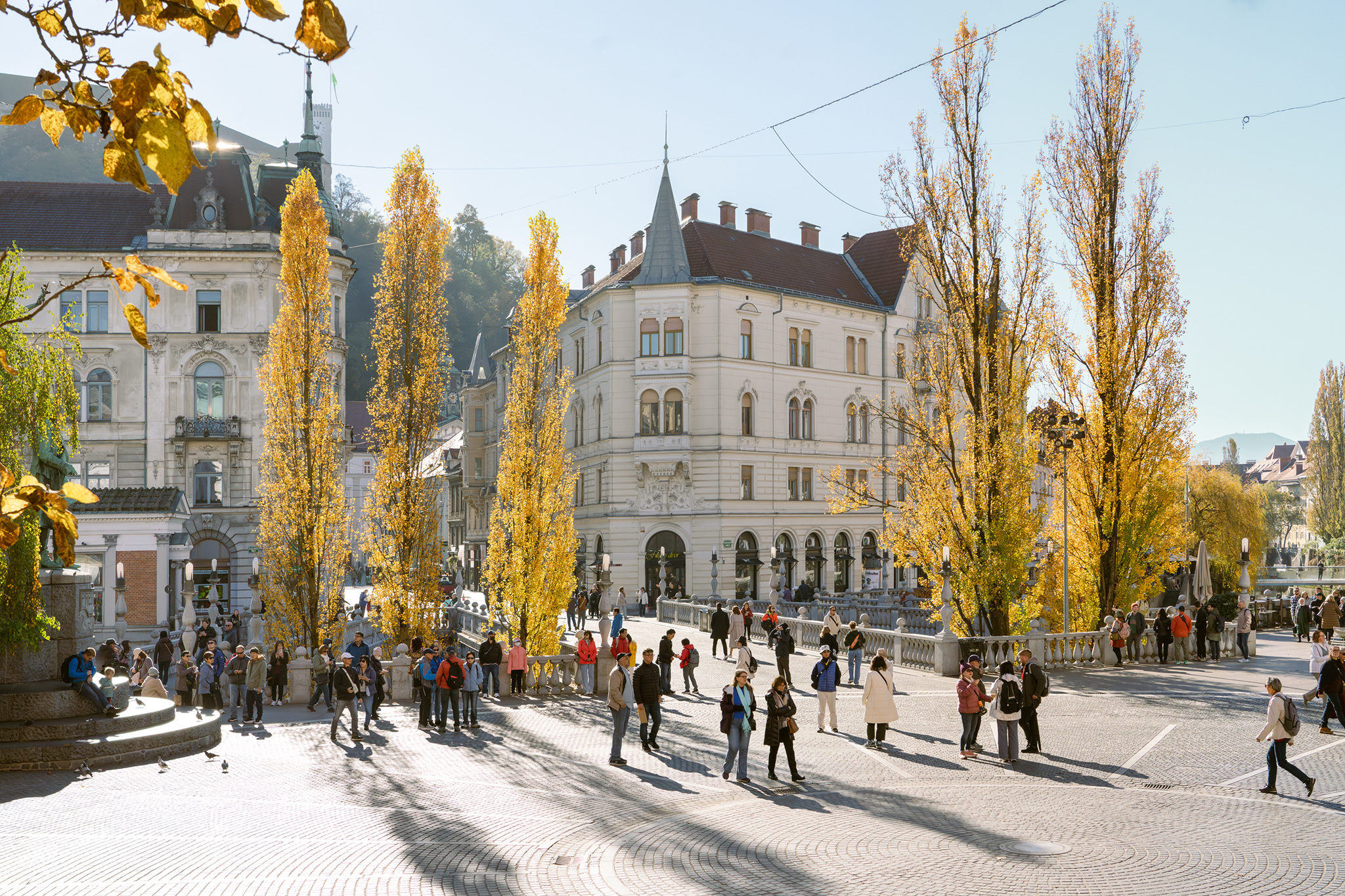
The site is a central hub and/or intersection of various parts of Ljubljana. It is a gateway to different prominent parts of the city and serves to bring the central Prešeren Square (which with the development of the Three Bridges became one with the ensemble) across the river to a narrow street running towards the Town Square with the Town Hall, where the view opens up on one of Ljubljana’s symbols – the castle. Plečnik’s innovative design for the Three Bridges used a funnel-shaped composition with pedestrian bridges on either side of the old one to effectively address the urban complexity of the site. This way, he unified the space and regulated the flow of foot traffic to and from Prešeren Square.
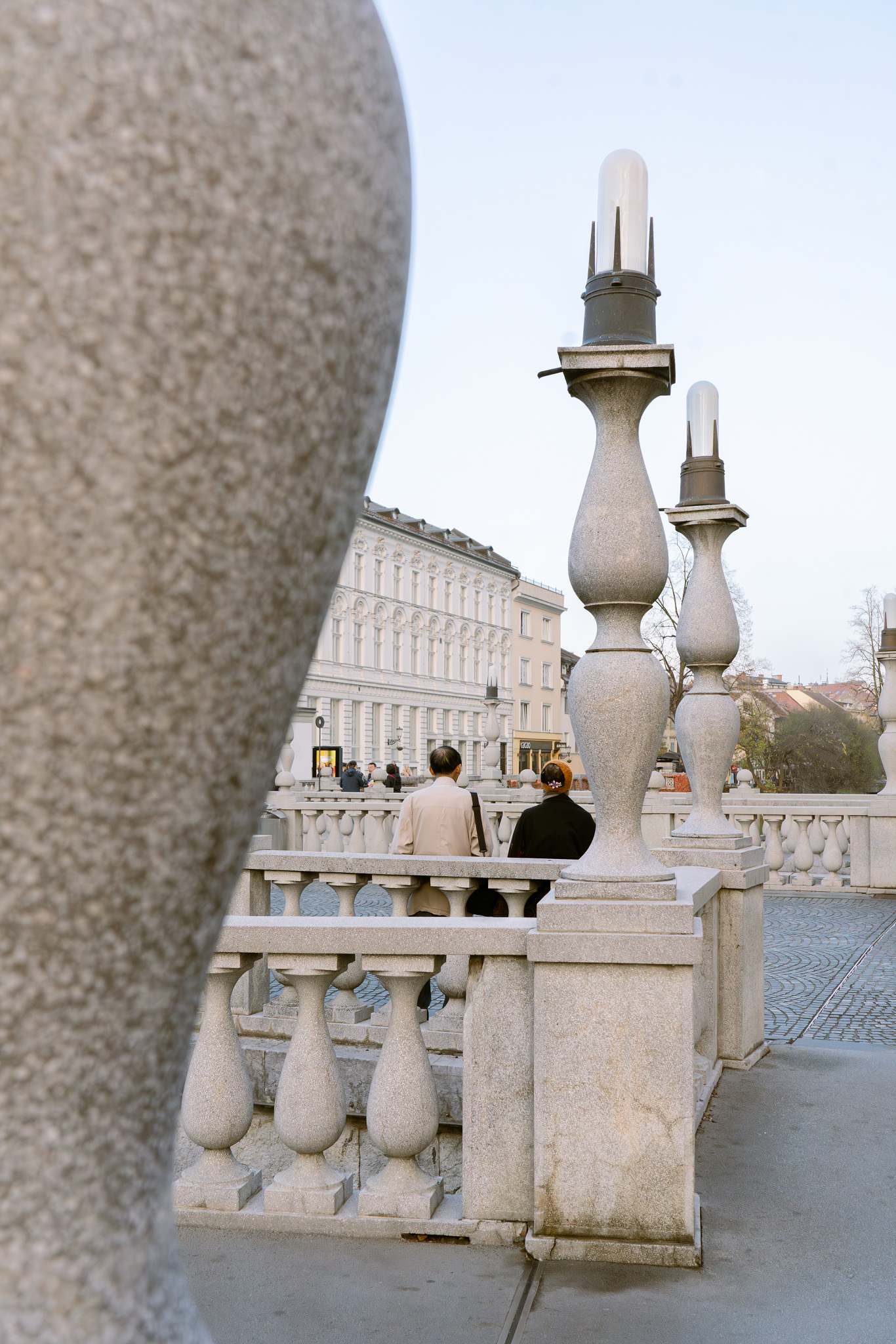
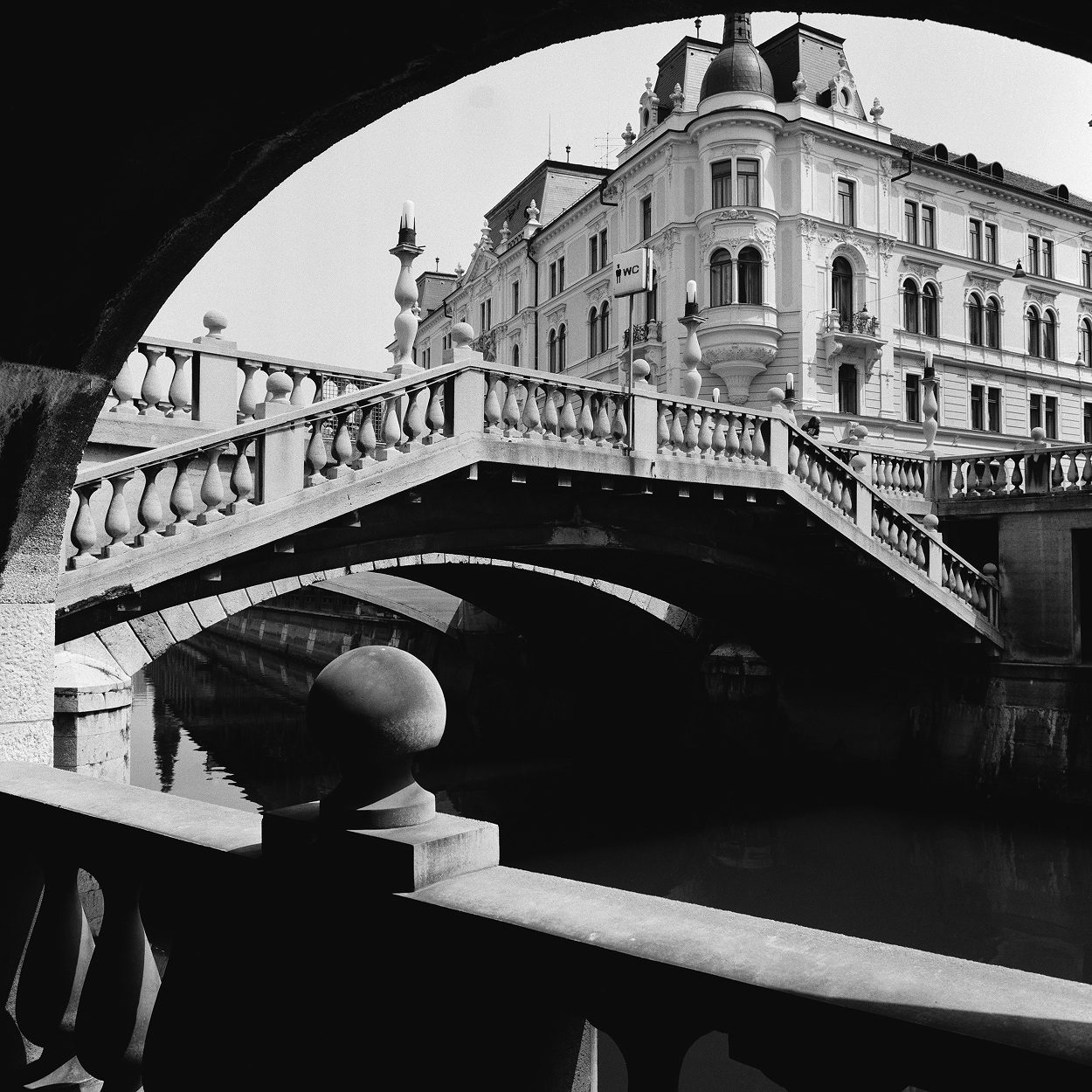
He removed the iron railings on the stone bridge and repurposed them for the nearby Gerber stairway. Seeking ways to bring out the city’s Mediterranean character, he furnished the Three Bridges with classical balustrades and adorned them with lamps. To connect the bridge with the river level, he added stairways to the pedestrian bridges, creating the ensemble’s distinctive image that is reminiscent of Venetian bridges.
1931–1932
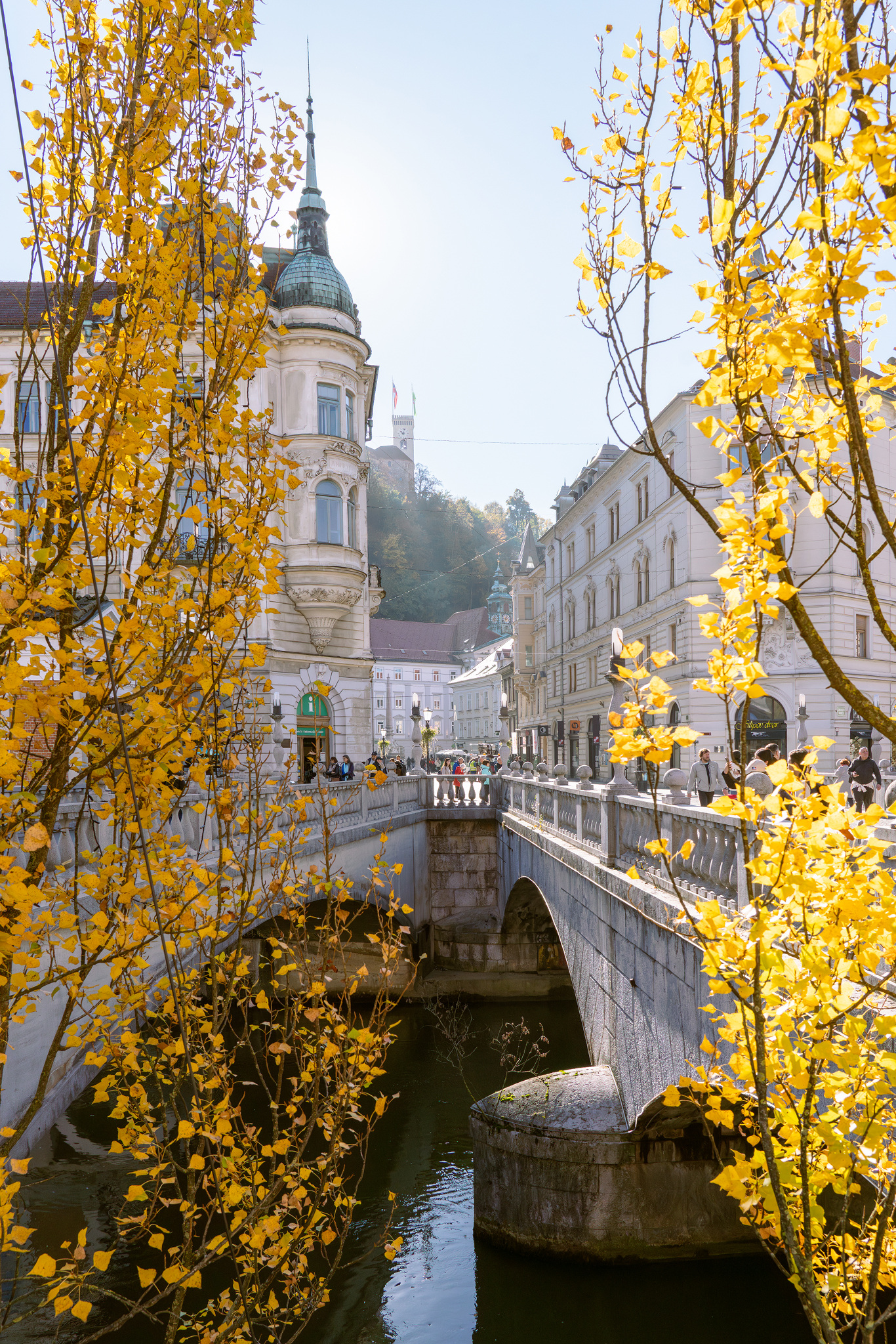
A master of small-scale urbanism, Plečnik designed the Three Bridges so as to revitalise the existing space by transcending the mere utilitarian function of the bridge and transformed the new ensemble into one of the city’s most vibrant hubs. The Three Bridges was a response to Ljubljana’s intensifying urbanisation. The existing stone bridge, which at the time accommodated a tramline, became too small for the growing city and its traffic needs. Rather than demolishing the stone bridge, Plečnik proposed extending it by adding two new pedestrian bridges, one on each side of the old one. This allowed him to maintain the historical integrity of the site and enhance it with new functionality.
The site is a central hub and/or intersection of various parts of Ljubljana. It is a gateway to different prominent parts of the city and serves to bring the central Prešeren Square (which with the development of the Three Bridges became one with the ensemble) across the river to a narrow street running towards the Town Square with the Town Hall, where the view opens up on one of Ljubljana’s symbols – the castle. Plečnik’s innovative design for the Three Bridges used a funnel-shaped composition with pedestrian bridges on either side of the old one to effectively address the urban complexity of the site. This way, he unified the space and regulated the flow of foot traffic to and from Prešeren Square.
He removed the iron railings on the stone bridge and repurposed them for the nearby Gerber stairway. Seeking ways to bring out the city’s Mediterranean character, he furnished the Three Bridges with classical balustrades and adorned them with lamps. To connect the bridge with the river level, he added stairways to the pedestrian bridges, creating the ensemble’s distinctive image that is reminiscent of Venetian bridges.