


Cobblers’ Bridge
1931–1932
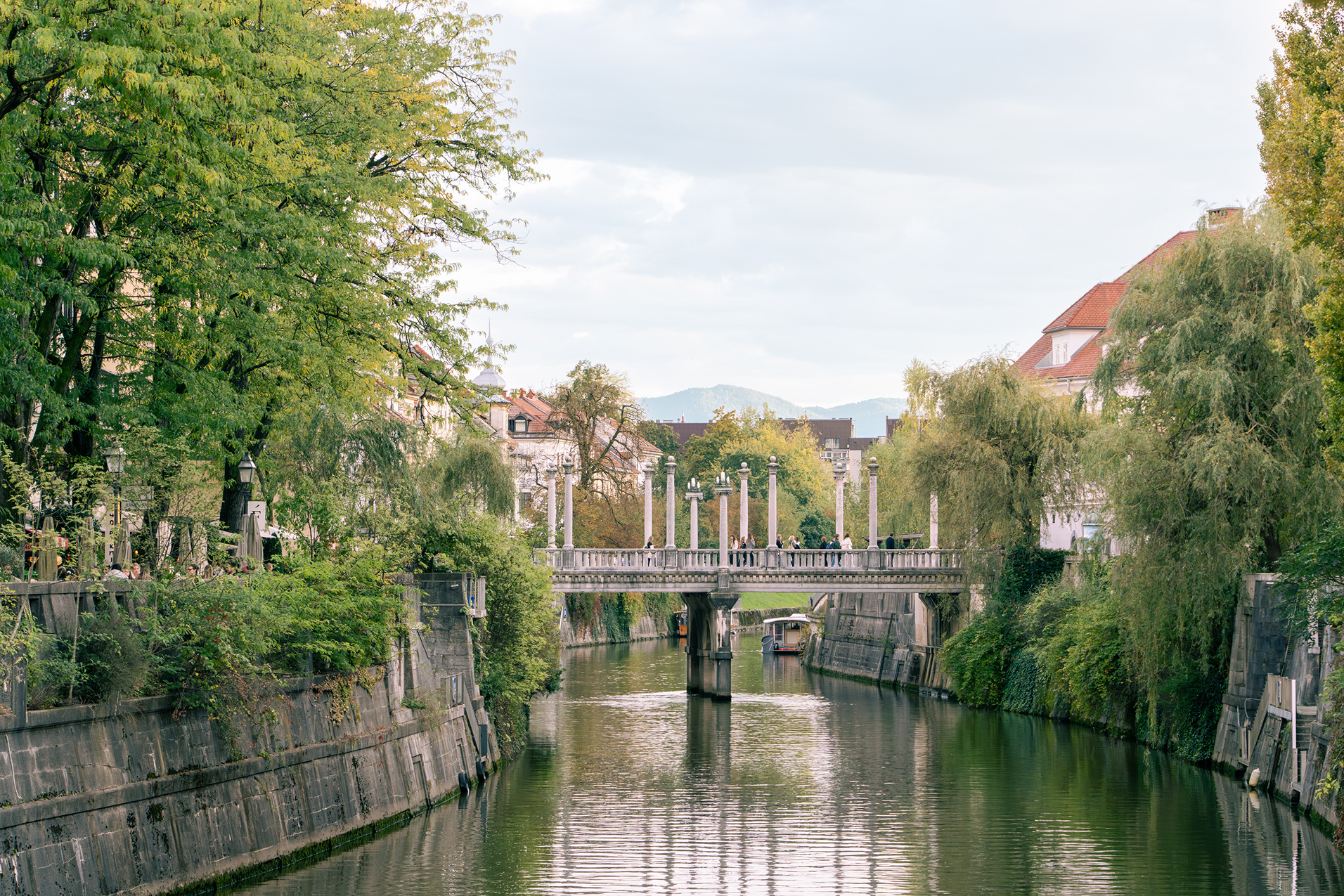
Cobblers’ Bridge stands on a site that for centuries served as one of the key links between two significant squares (Town Square and New Square) which shaped the evolution of medieval Ljubljana. A wooden bridge spanned the river on the same site already in the Middle Ages, and was replaced by a new, cast iron bridge in 1867. In the 1930s, the latter was replaced with Cobblers’ Bridge.
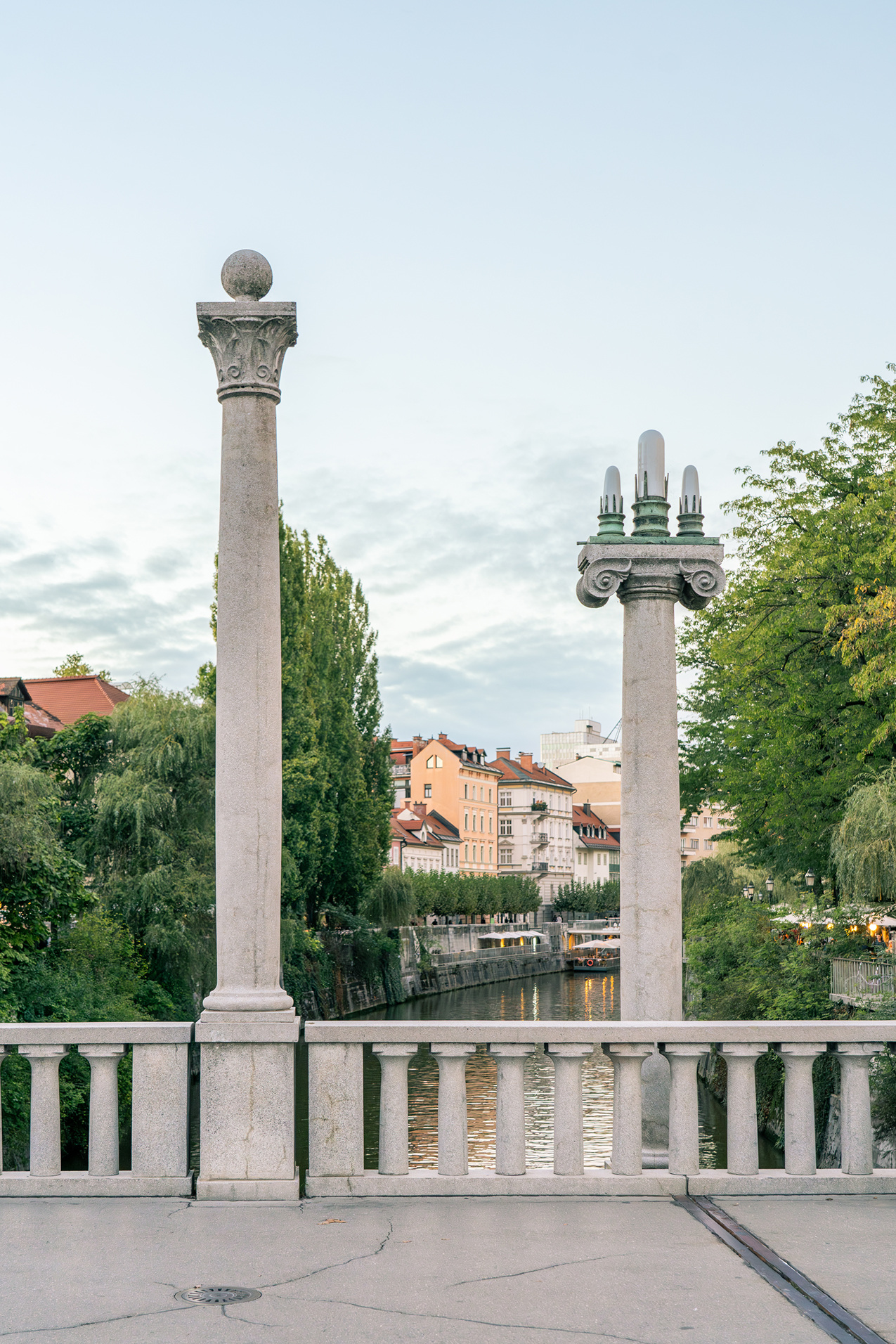
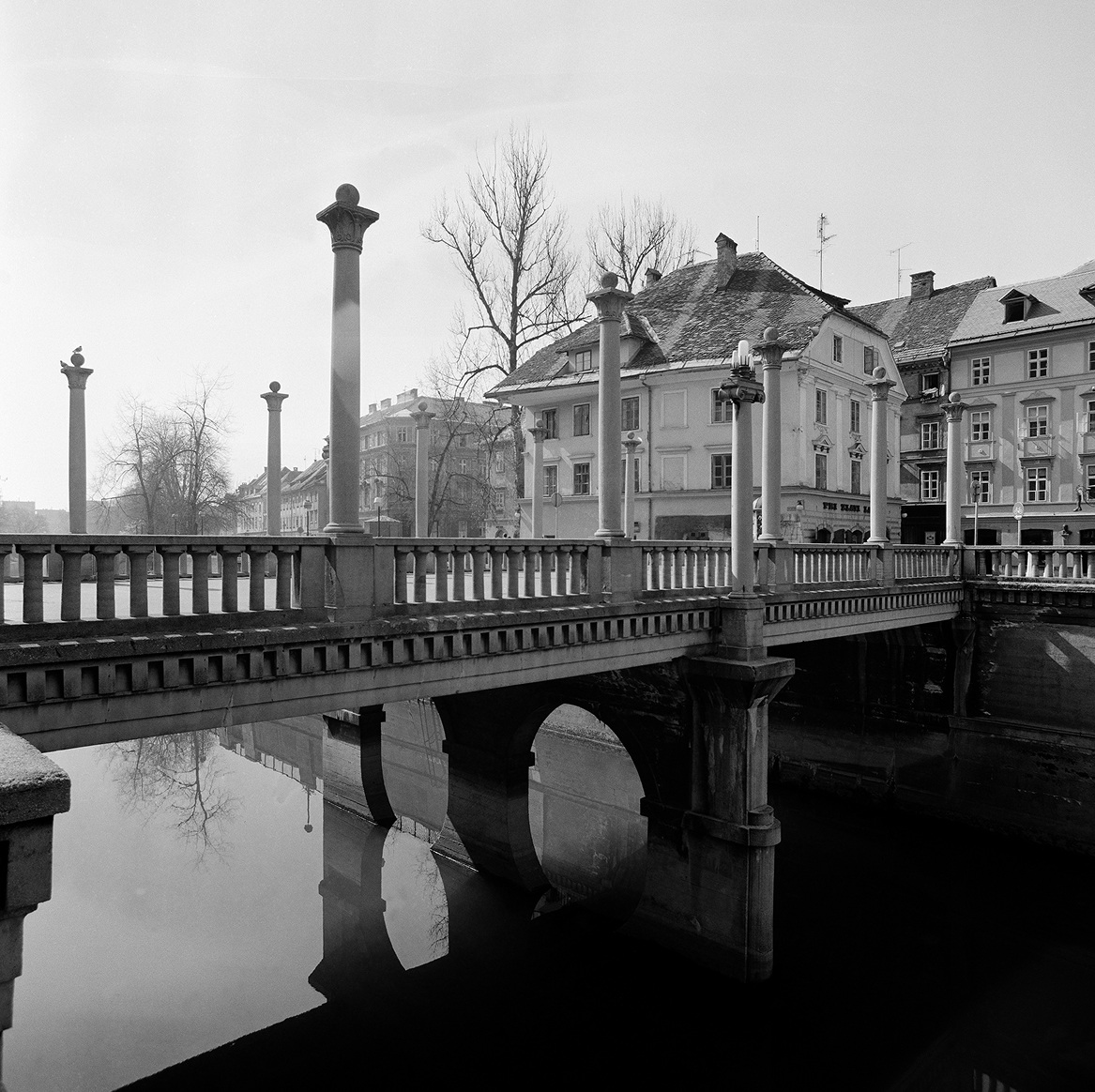
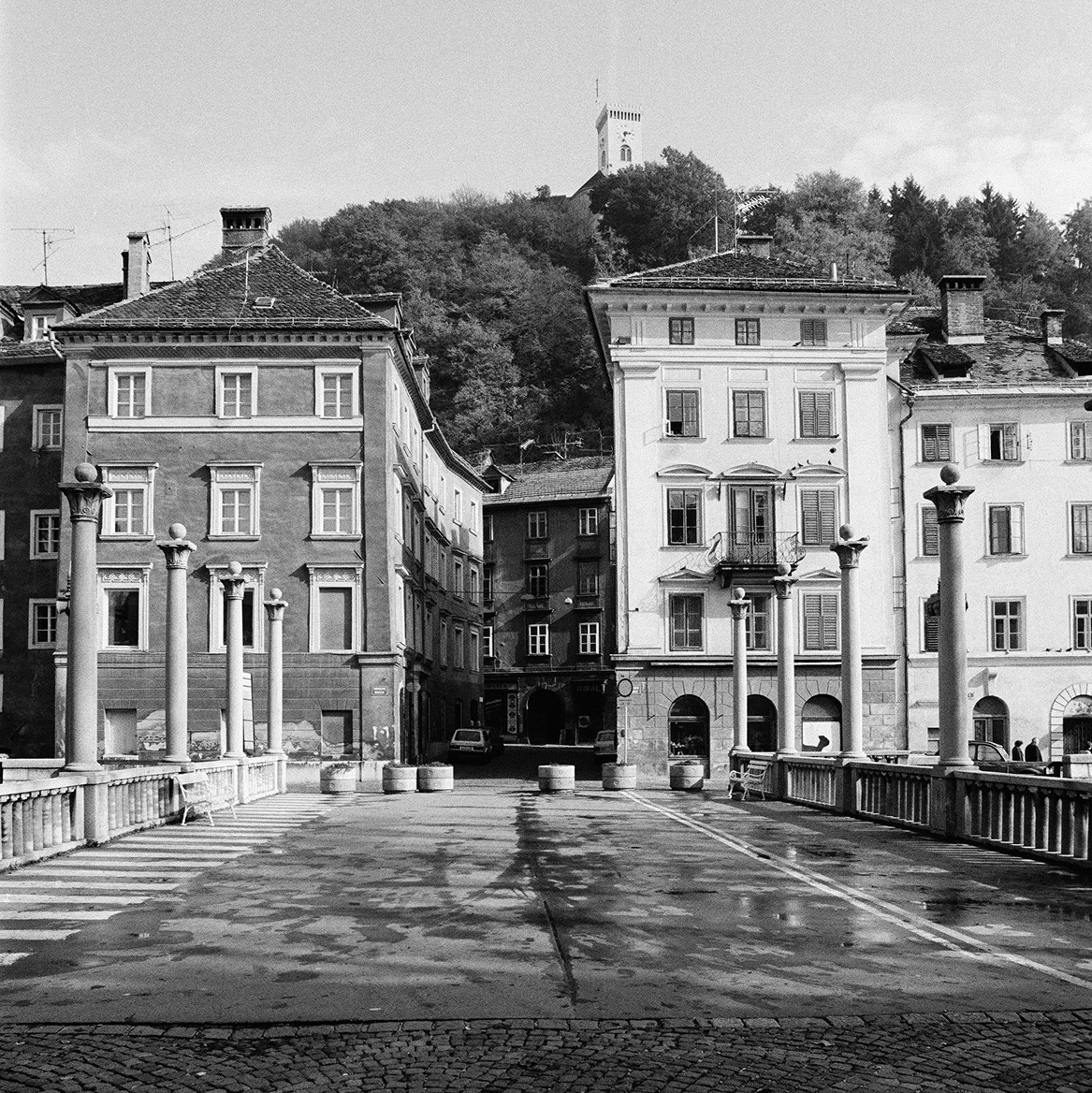
Plečnik pushed the boundaries of established forms of architecture and elevated them with various functions. Cobblers’ Bridge with its width serves as a square above water. Its role is accentuated with a series of columns: Corinthian columns projecting from the balustrade outline the space, and two Ionic columns that carry lamps. The basic utilitarian value of the bridge is thus elevated into an open platform that invites residents to various uses. Rather than pull down the old cast iron bridge, Plečnik had it moved and reinstalled near today’s Institute of Anatomy. The bridge was relocated again in 2011 to its present-day location by Trnovo Quay.
Cobblers’ Bridge
1931–1932
Cobblers’ Bridge stands on a site that for centuries served as one of the key links between two significant squares (Town Square and New Square) which shaped the evolution of medieval Ljubljana. A wooden bridge spanned the river on the same site already in the Middle Ages, and was replaced by a new, cast iron bridge in 1867. In the 1930s, the latter was replaced with Cobblers’ Bridge.
Plečnik pushed the boundaries of established forms of architecture and elevated them with various functions. Cobblers’ Bridge with its width serves as a square above water. Its role is accentuated with a series of columns: Corinthian columns projecting from the balustrade outline the space, and two Ionic columns that carry lamps. The basic utilitarian value of the bridge is thus elevated into an open platform that invites residents to various uses. Rather than pull down the old cast iron bridge, Plečnik had it moved and reinstalled near today’s Institute of Anatomy. The bridge was relocated again in 2011 to its present-day location by Trnovo Quay.