


1939–1945
In its melodic rhythm, the Ljubljanica River navigates its way through alternating natural and urban sequences. From Trnovo Quay down to Cobblers’ Bridge, green accents punctuate the space where the river winds in harmony with green areas. Further on, the riverbed rises and the space communicates through increasing monumentality, with the distinctly classical language of the Three Bridges and the Market. The green accent is reintroduced once past Plečnik’s Market, with tree avenues on either side of the river, marking its way to the monumental conclusion of the stretch, Plečnik’s Sluice Gate.
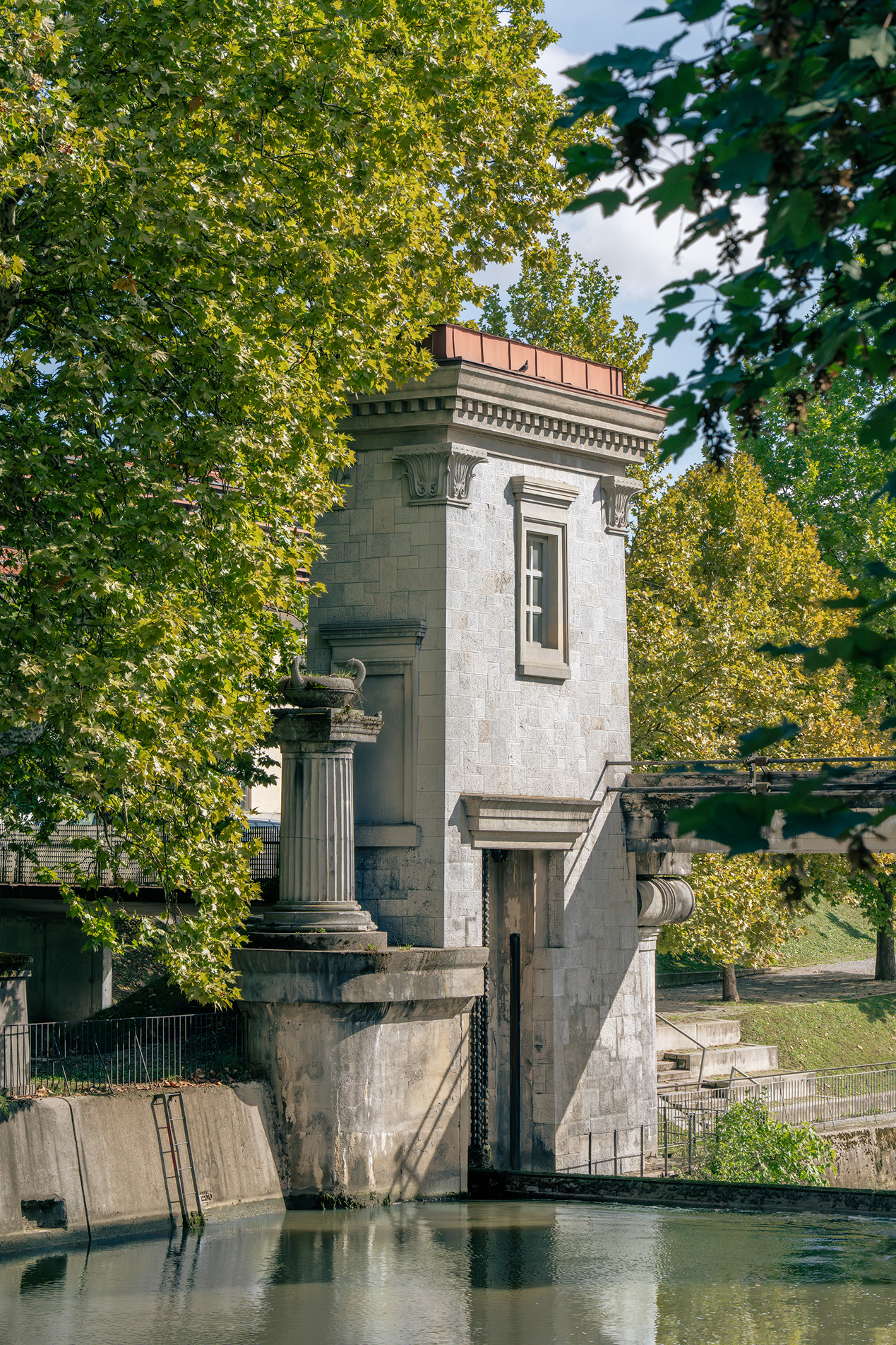
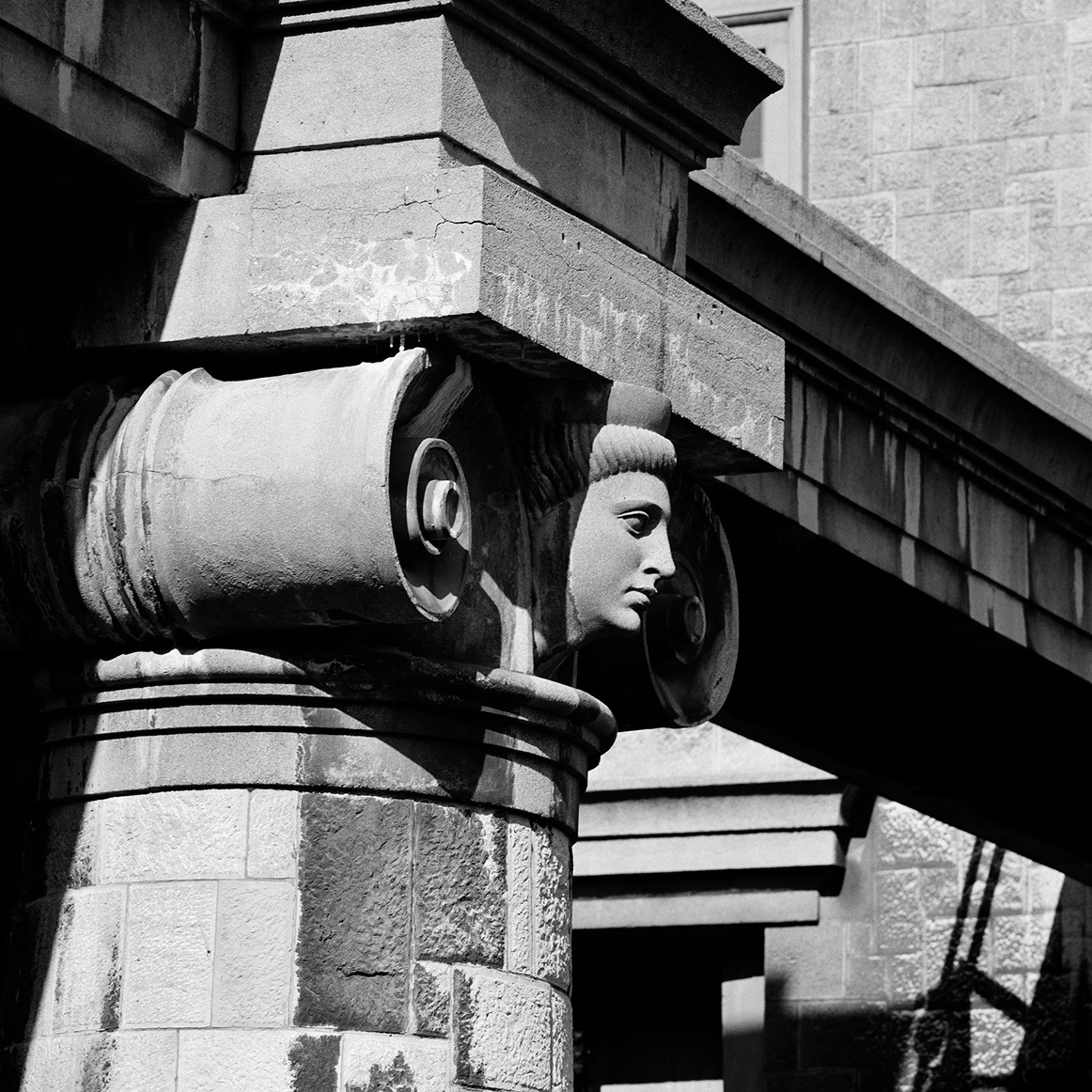
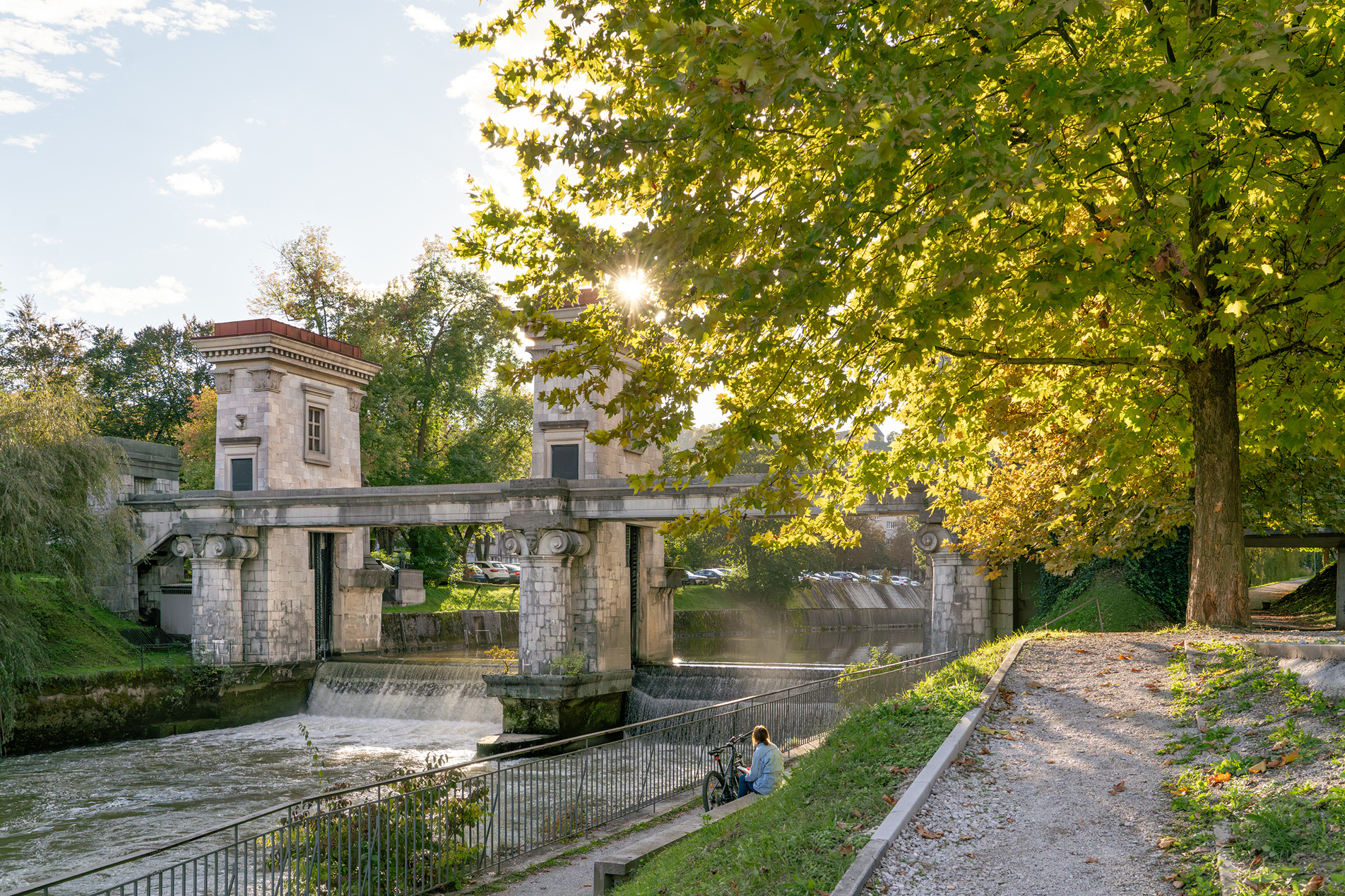
Designed as a triumphant arch, the Sluice Gate ensemble consists of three towers and horizontal connections that hide the mechanism of the barrier. The design is completed with a riverside park on either side of the Sluice Gate (Ambrož Square and Vraz Square), softening its monumental appearance. With his original symbolism incorporating Egyptian, Etruscan, and classical influences, Plečnik underlined the river’s symbolic presence, while the formidable structure of the sluice gate demonstrates man’s control over the river.
1939–1945
In its melodic rhythm, the Ljubljanica River navigates its way through alternating natural and urban sequences. From Trnovo Quay down to Cobblers’ Bridge, green accents punctuate the space where the river winds in harmony with green areas. Further on, the riverbed rises and the space communicates through increasing monumentality, with the distinctly classical language of the Three Bridges and the Market. The green accent is reintroduced once past Plečnik’s Market, with tree avenues on either side of the river, marking its way to the monumental conclusion of the stretch, Plečnik’s Sluice Gate.
Designed as a triumphant arch, the Sluice Gate ensemble consists of three towers and horizontal connections that hide the mechanism of the barrier. The design is completed with a riverside park on either side of the Sluice Gate (Ambrož Square and Vraz Square), softening its monumental appearance. With his original symbolism incorporating Egyptian, Etruscan, and classical influences, Plečnik underlined the river’s symbolic presence, while the formidable structure of the sluice gate demonstrates man’s control over the river.