


Trnovo Bridge (the Land Axis)
1931–1932
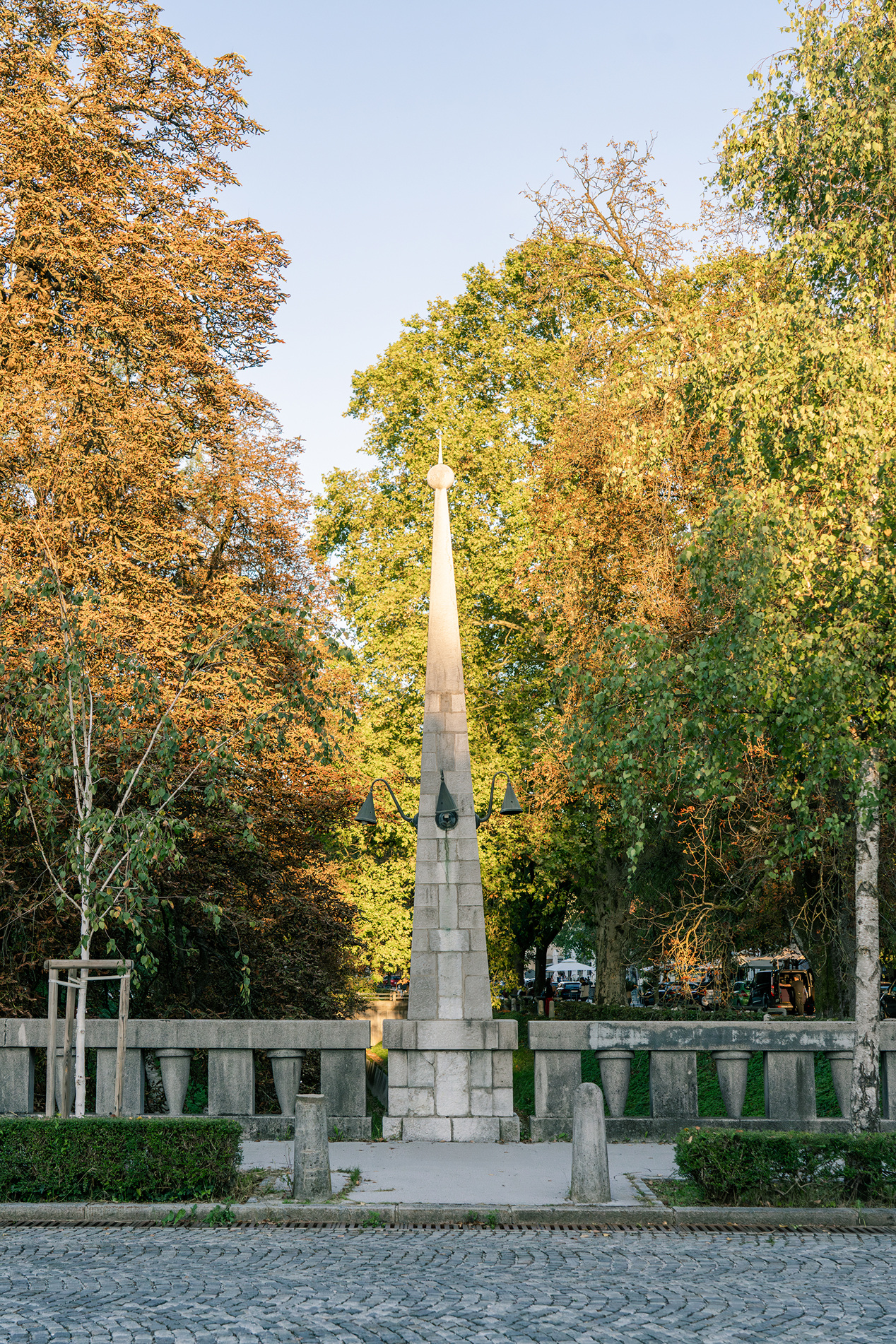
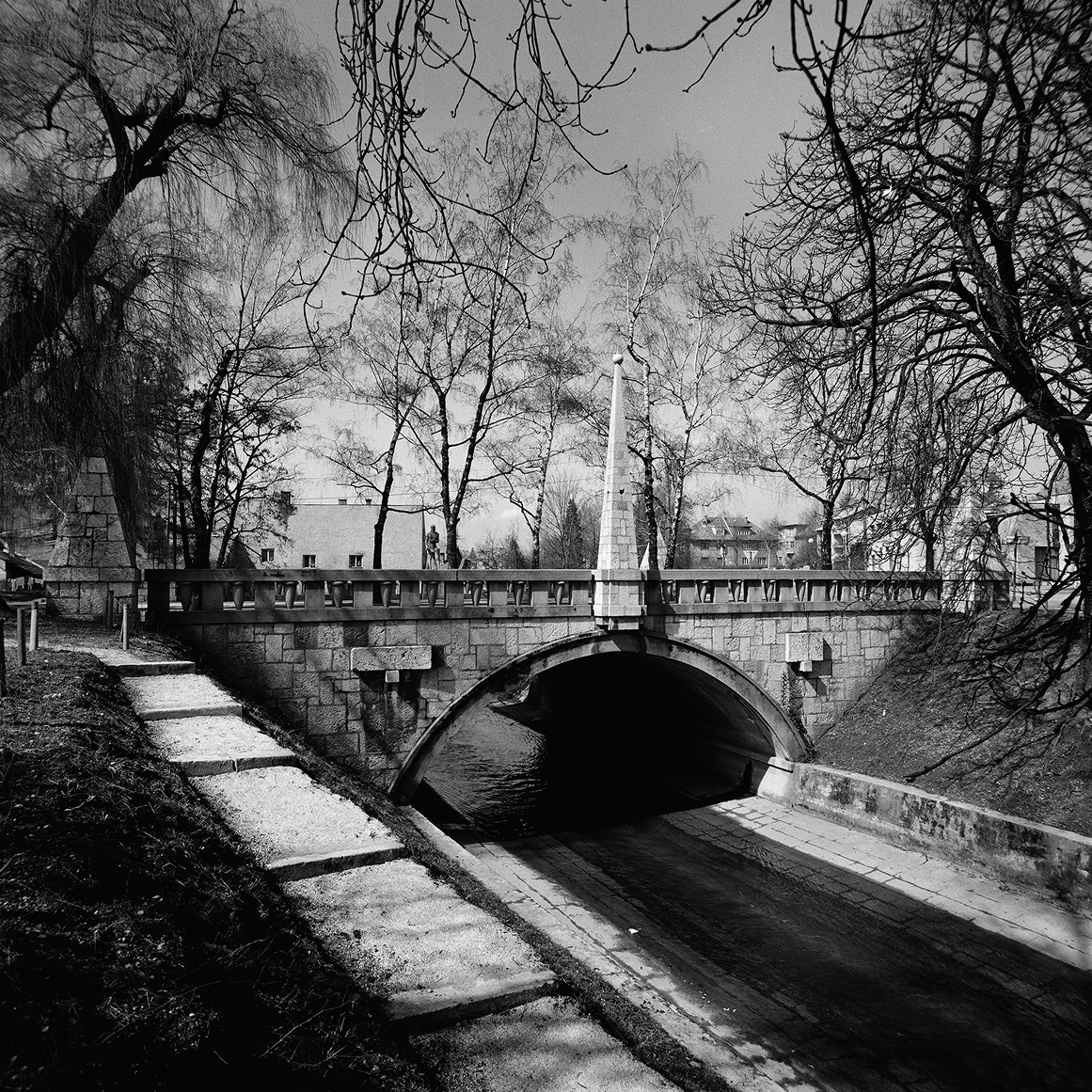
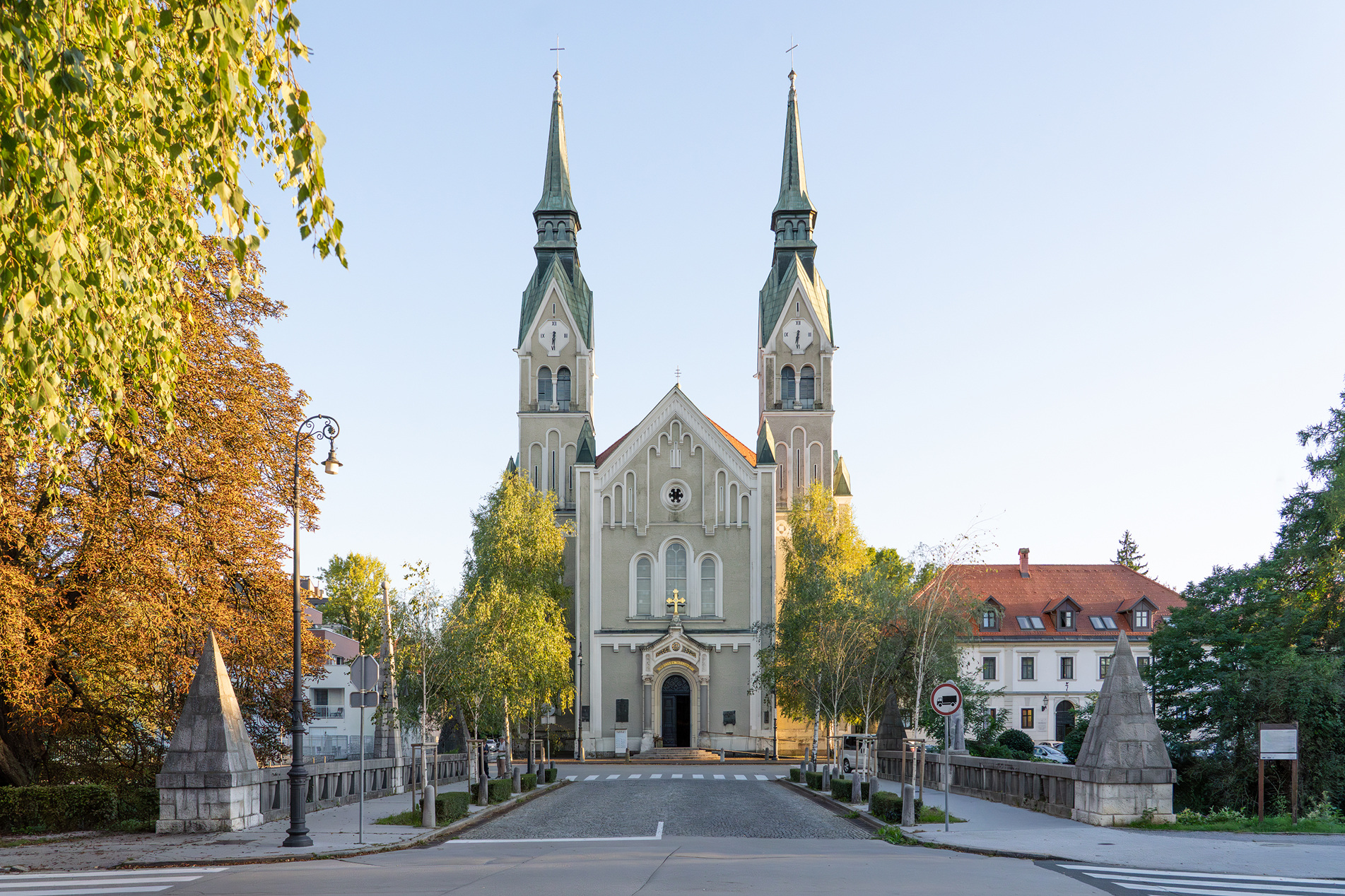
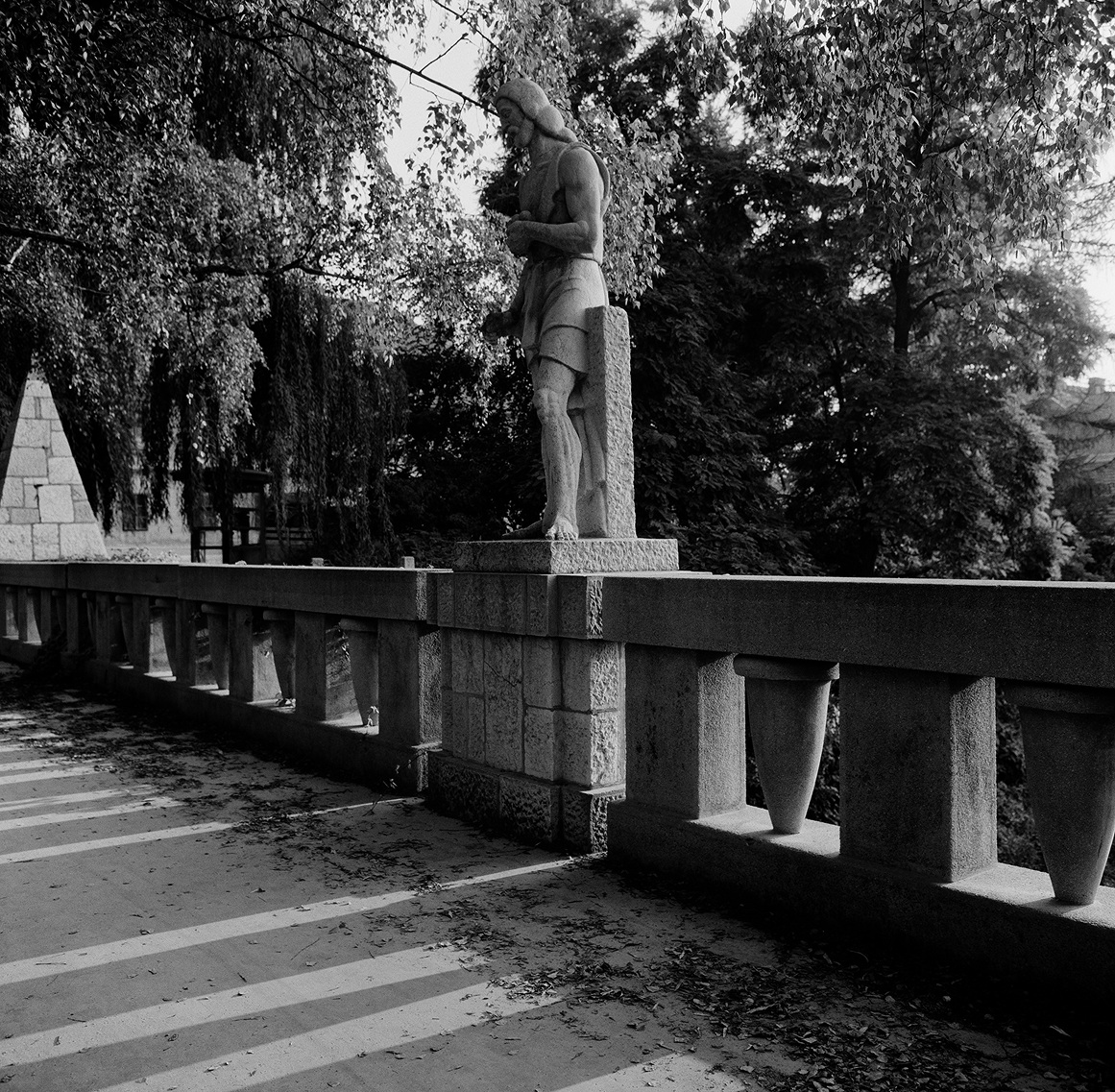
Standing on the site of its damaged predecessor, Trnovo Bridge with its seventeen metres in width serves as a forecourt to the church and/or square. This function is accentuated with a series of elements, from trees (originally willows, now birches) and a monument (sculpture of St. John the Baptist), to the bollards that line the pavement. The bridge is flanked by a balustrade of massive vasiform balusters made of artificial stone and features two plaques, each marking its own side of the bridge, the first reading “KRAKOVU” (To Krakov) and the other “TRNOVU” (To Trnovo). Its monumentality is accentuated with five pyramids, a signature motif in Plečnik’s network of architectural elements employed to mark his interventions and connect them into a broader urban network.
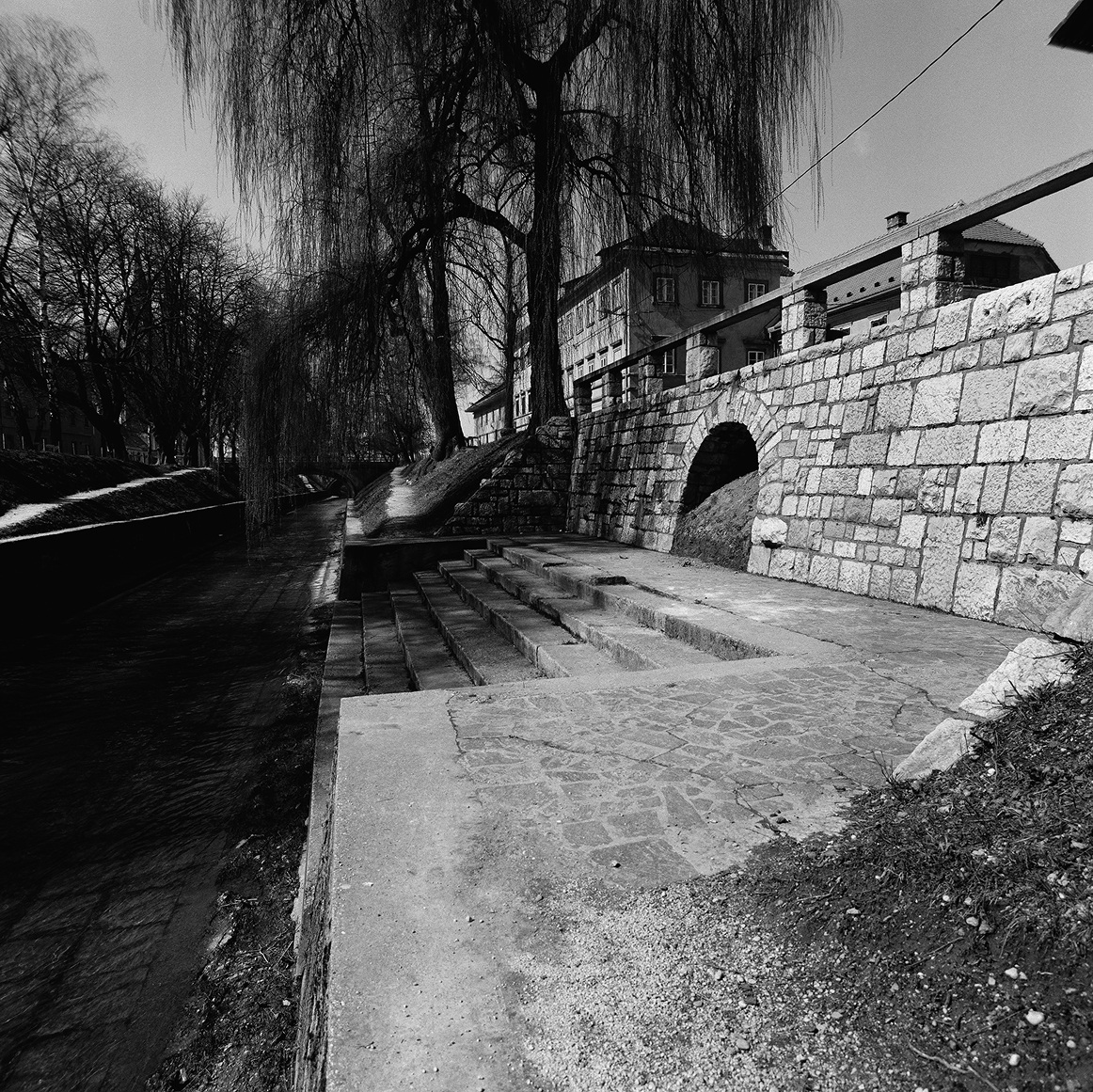
With its position, Trnovo Bridge stands as a prelude to the land axis, which connects Trnovo with Vegova Street via Emonska Street, as well as the transversal axis that consists of the embankments of the Gradaščica River. The design of the latter evokes the design of the Ljubljanica River, with access ways descending to the river, a laundry area, greenery, and other elements that serve to open the river up to the city and provide a park by the river.
Trnovo Bridge (the Land Axis)
1931–1932
Standing on the site of its damaged predecessor, Trnovo Bridge with its seventeen metres in width serves as a forecourt to the church and/or square. This function is accentuated with a series of elements, from trees (originally willows, now birches) and a monument (sculpture of St. John the Baptist), to the bollards that line the pavement. The bridge is flanked by a balustrade of massive vasiform balusters made of artificial stone and features two plaques, each marking its own side of the bridge, the first reading “KRAKOVU” (To Krakov) and the other “TRNOVU” (To Trnovo). Its monumentality is accentuated with five pyramids, a signature motif in Plečnik’s network of architectural elements employed to mark his interventions and connect them into a broader urban network.
With its position, Trnovo Bridge stands as a prelude to the land axis, which connects Trnovo with Vegova Street via Emonska Street, as well as the transversal axis that consists of the embankments of the Gradaščica River. The design of the latter evokes the design of the Ljubljanica River, with access ways descending to the river, a laundry area, greenery, and other elements that serve to open the river up to the city and provide a park by the river.