


1929–1942
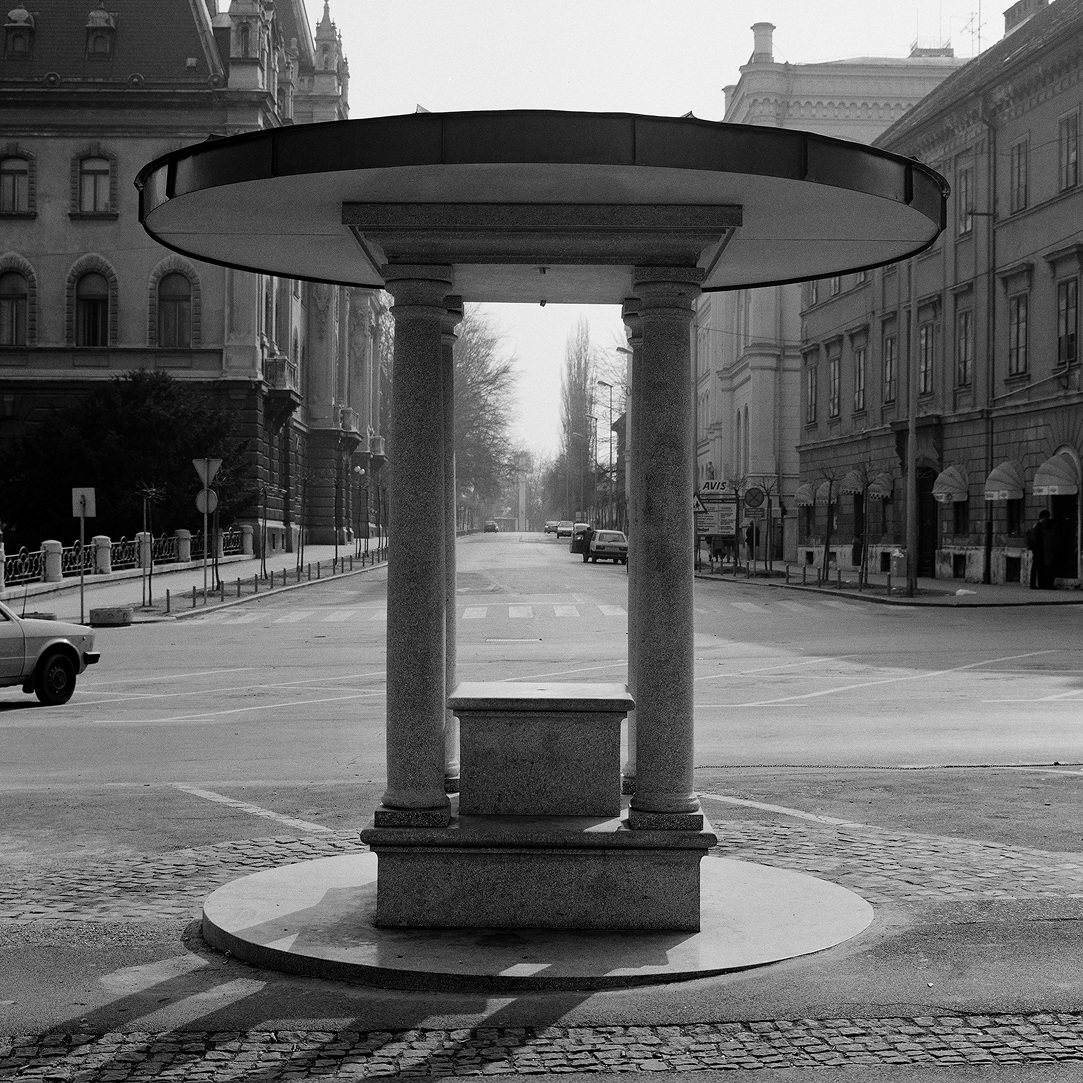
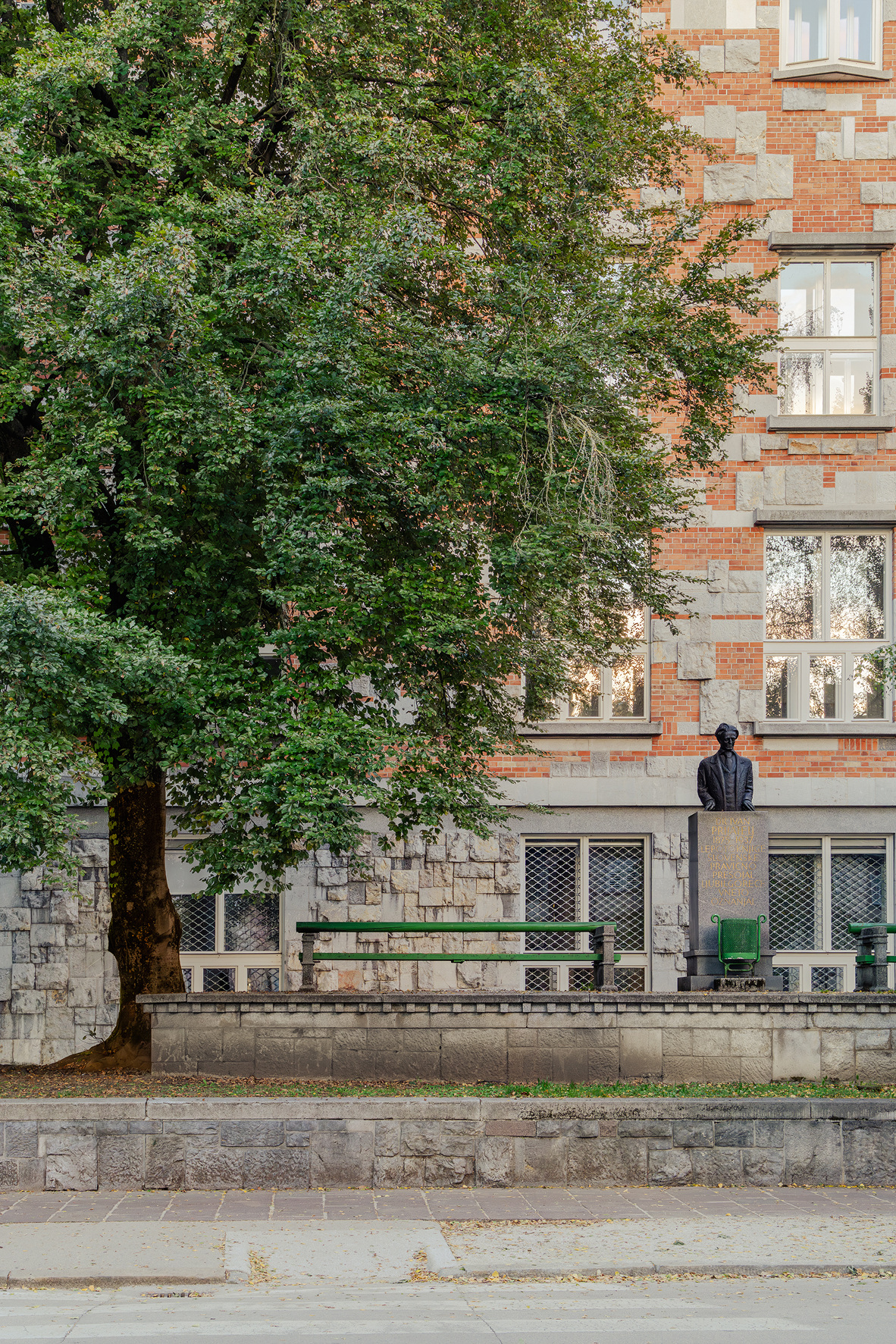
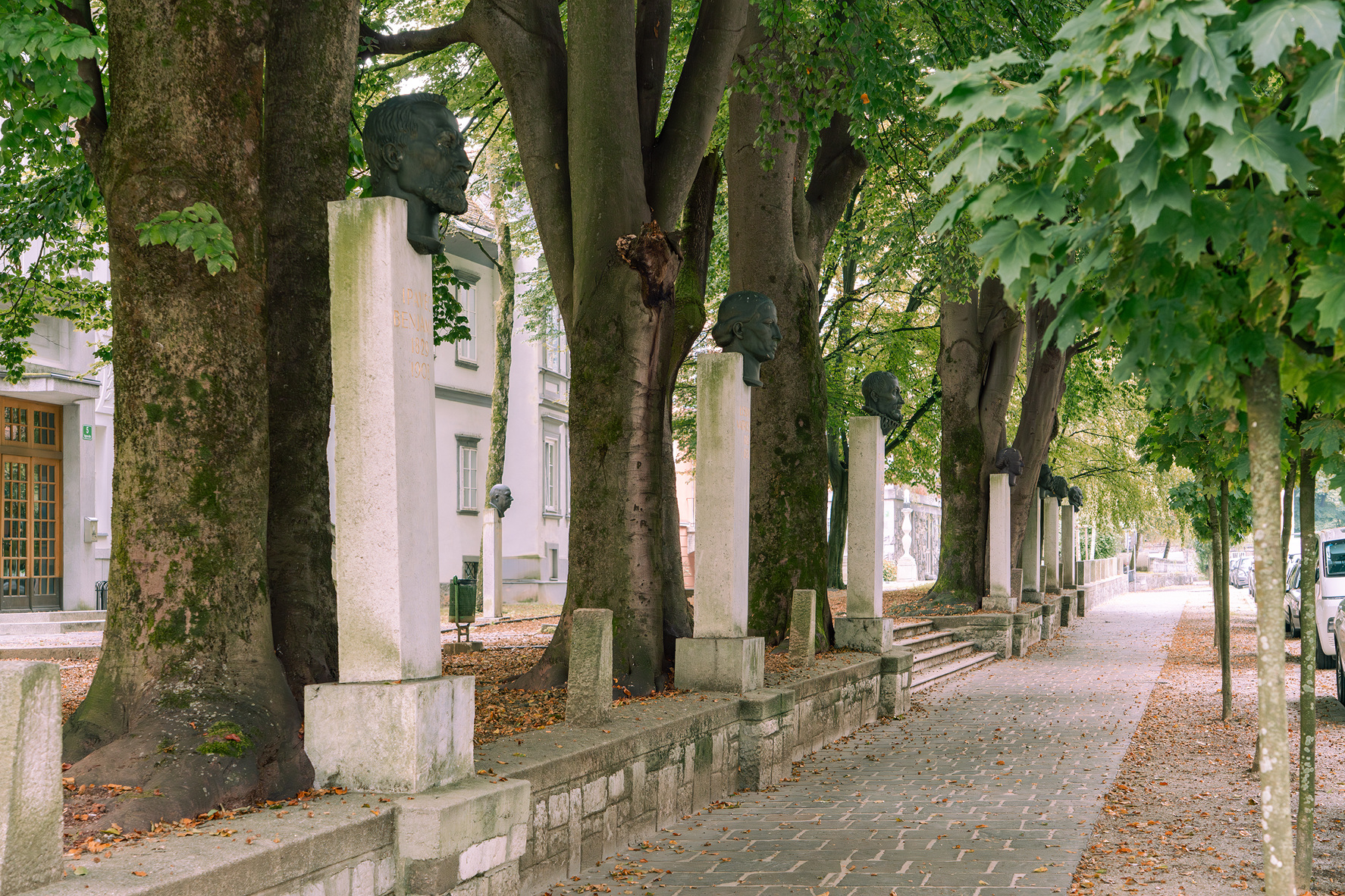
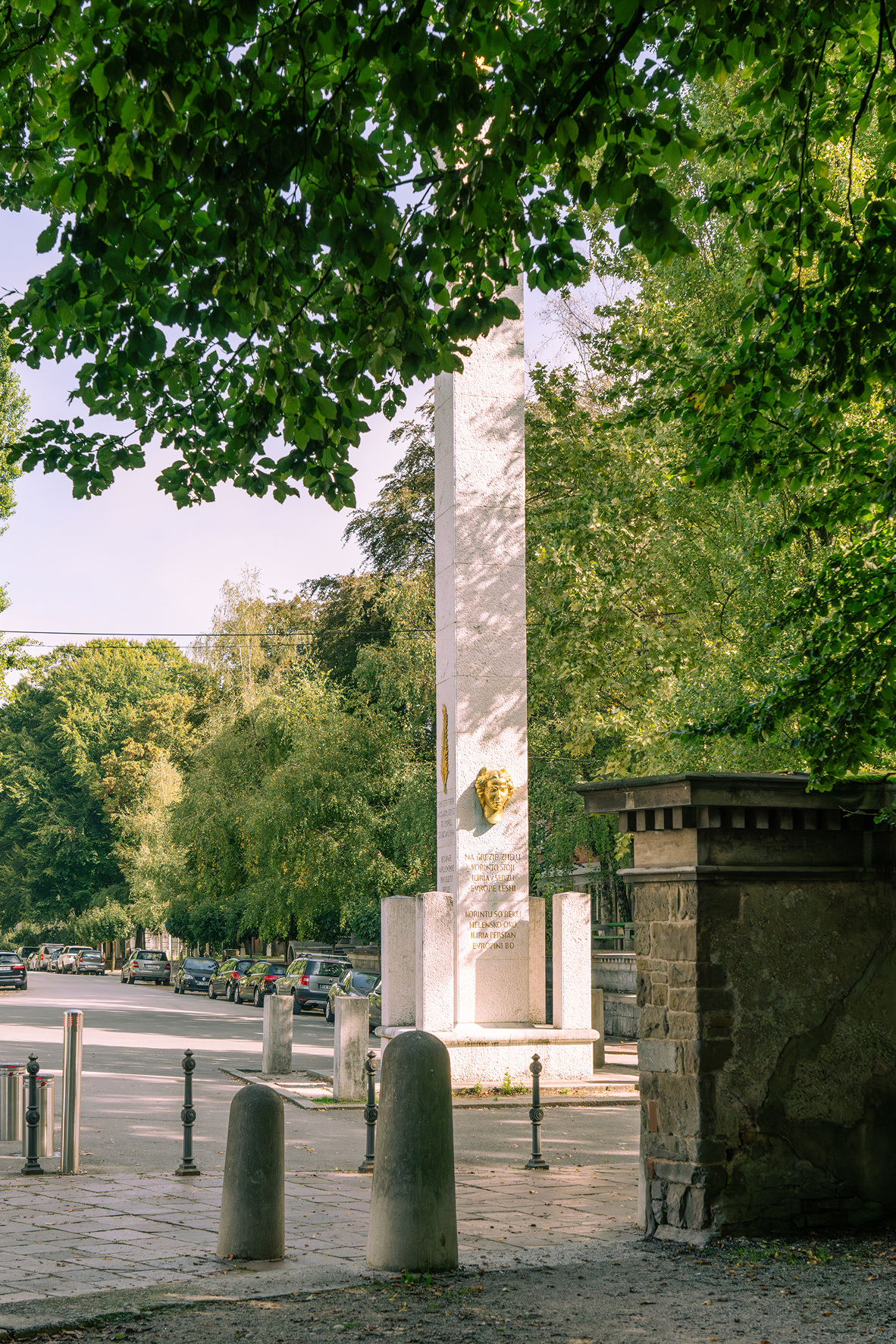
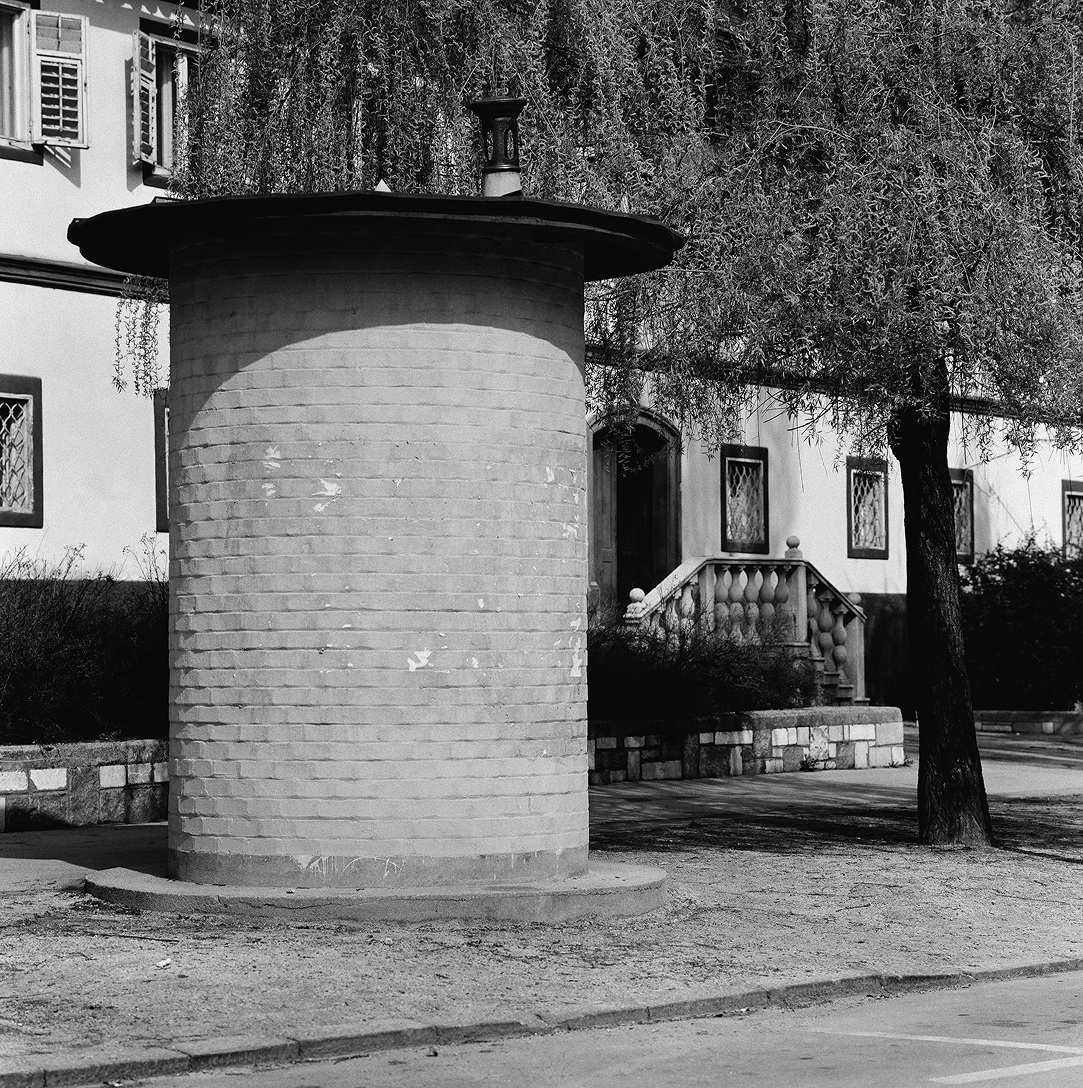
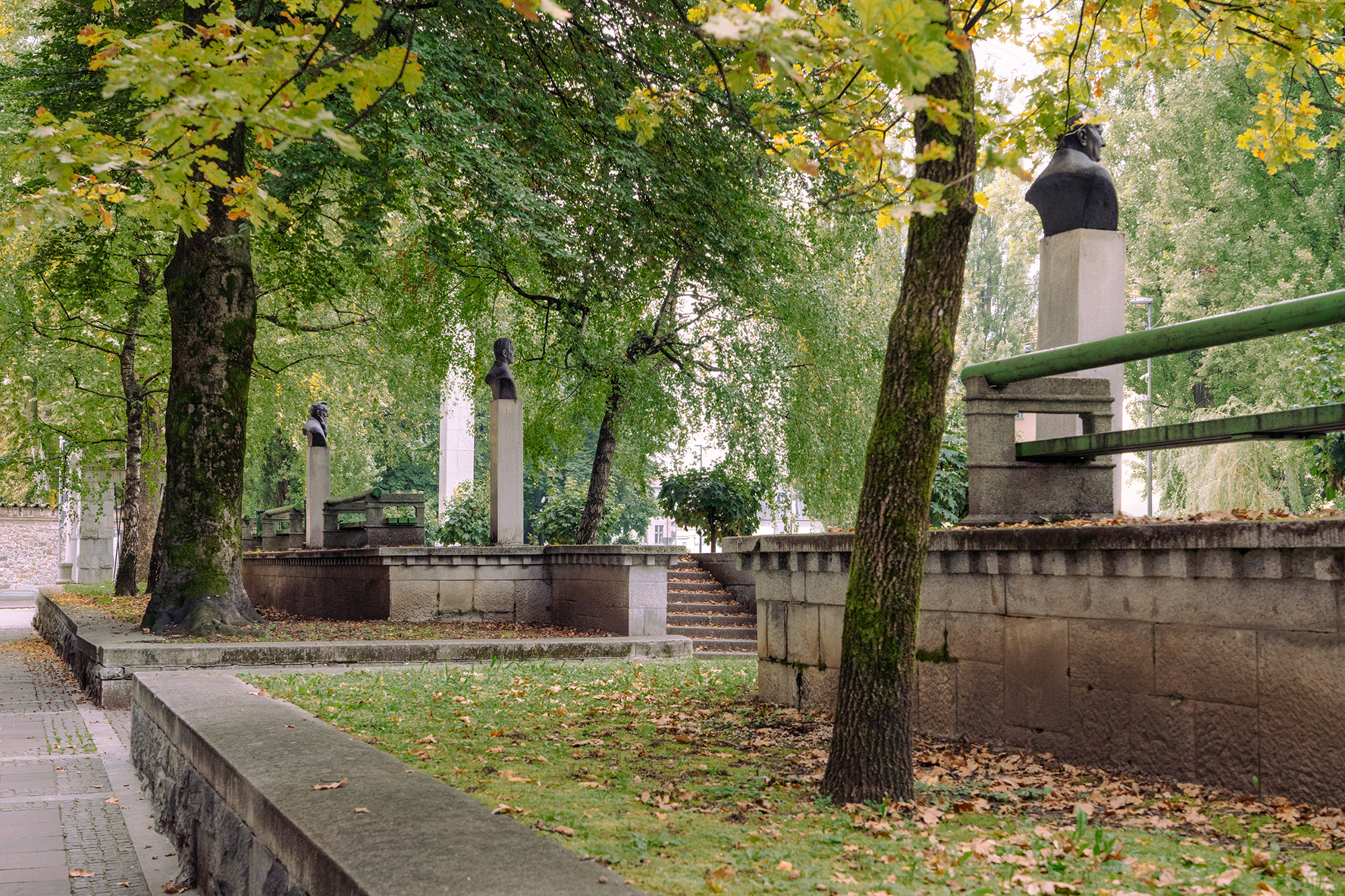
Through gradual large- and small-scale interventions, Plečnik embedded Vegova Street into the urban street network and raised it to become one of the central parts of the land axis. His small interventions include new paving, kerbstones, footpaths, green accents, accentuated details (such as the terrace in front of the library or the newsstand) and a row of herms that provide a sense of optical rhythm to the ensemble. User-inclusive spaces emerge through new interstitial or in-between spaces such as the park in front of the Music Society building and terraces with benches above the former city wall by the library, and generous greenery. The multi-point approach to design is manifested in the connection between the Illyrian Column at French Revolution Square and the weather house at the Congress Square, which the architect connected into a single gesture/axis across a sequence of new elements, buildings, and spaces.
Vegova Street is located on the site of the former moat, at the contact point of the Roman Emona walls and the walls of the medieval city. Articulating the gradual organic development from the moat and/or walls (e.g. with the symbolic reference to the former walls in the form of terraces and by preserving the street gesture), Plečnik evoked the memory of the Roman, medieval, and baroque maps of the city, presenting the present-day image of Ljubljana as a mosaic of historical overlaps. He evoked the historical significance of Ljubljana as a city with a long history (terraces as the legacy of the antiquity and the Middle Ages) and a symbolic capital (monument to the Illyrian Provinces, in which Ljubljana had the status of a capital), and emphasised language as the foundation of Slovenian national culture with the tectonic presence of the library. The street with its educational institutions and other buildings that together perform a cultural function is also known as the cultural axis of the city.
1929–1942
Through gradual large- and small-scale interventions, Plečnik embedded Vegova Street into the urban street network and raised it to become one of the central parts of the land axis. His small interventions include new paving, kerbstones, footpaths, green accents, accentuated details (such as the terrace in front of the library or the newsstand) and a row of herms that provide a sense of optical rhythm to the ensemble. User-inclusive spaces emerge through new interstitial or in-between spaces such as the park in front of the Music Society building and terraces with benches above the former city wall by the library, and generous greenery. The multi-point approach to design is manifested in the connection between the Illyrian Column at French Revolution Square and the weather house at the Congress Square, which the architect connected into a single gesture/axis across a sequence of new elements, buildings, and spaces.
Vegova Street is located on the site of the former moat, at the contact point of the Roman Emona walls and the walls of the medieval city. Articulating the gradual organic development from the moat and/or walls (e.g. with the symbolic reference to the former walls in the form of terraces and by preserving the street gesture), Plečnik evoked the memory of the Roman, medieval, and baroque maps of the city, presenting the present-day image of Ljubljana as a mosaic of historical overlaps. He evoked the historical significance of Ljubljana as a city with a long history (terraces as the legacy of the antiquity and the Middle Ages) and a symbolic capital (monument to the Illyrian Provinces, in which Ljubljana had the status of a capital), and emphasised language as the foundation of Slovenian national culture with the tectonic presence of the library. The street with its educational institutions and other buildings that together perform a cultural function is also known as the cultural axis of the city.