


1928–1940
The Congress Square and Zvezda Park site was largely shaped in the 19th century, when the site of the former Capuchin monastery was redesigned (the moats backfilled and the Capuchin square extended) in 1821 for the congress of the Holy Alliance, which gave the new square its present-day name. Three years after the congress, a park was laid out on the square, its pathways forming the shape of a star (the Slovenian word for star is zvezda). Prominent buildings line the square and the park, from the baroque Ursuline church of the Holy Trinity to 19th-century palaces (Kazina, the Philharmonic Hall, the Provincial Mansion, and others) that lend the space its characteristic form and character.
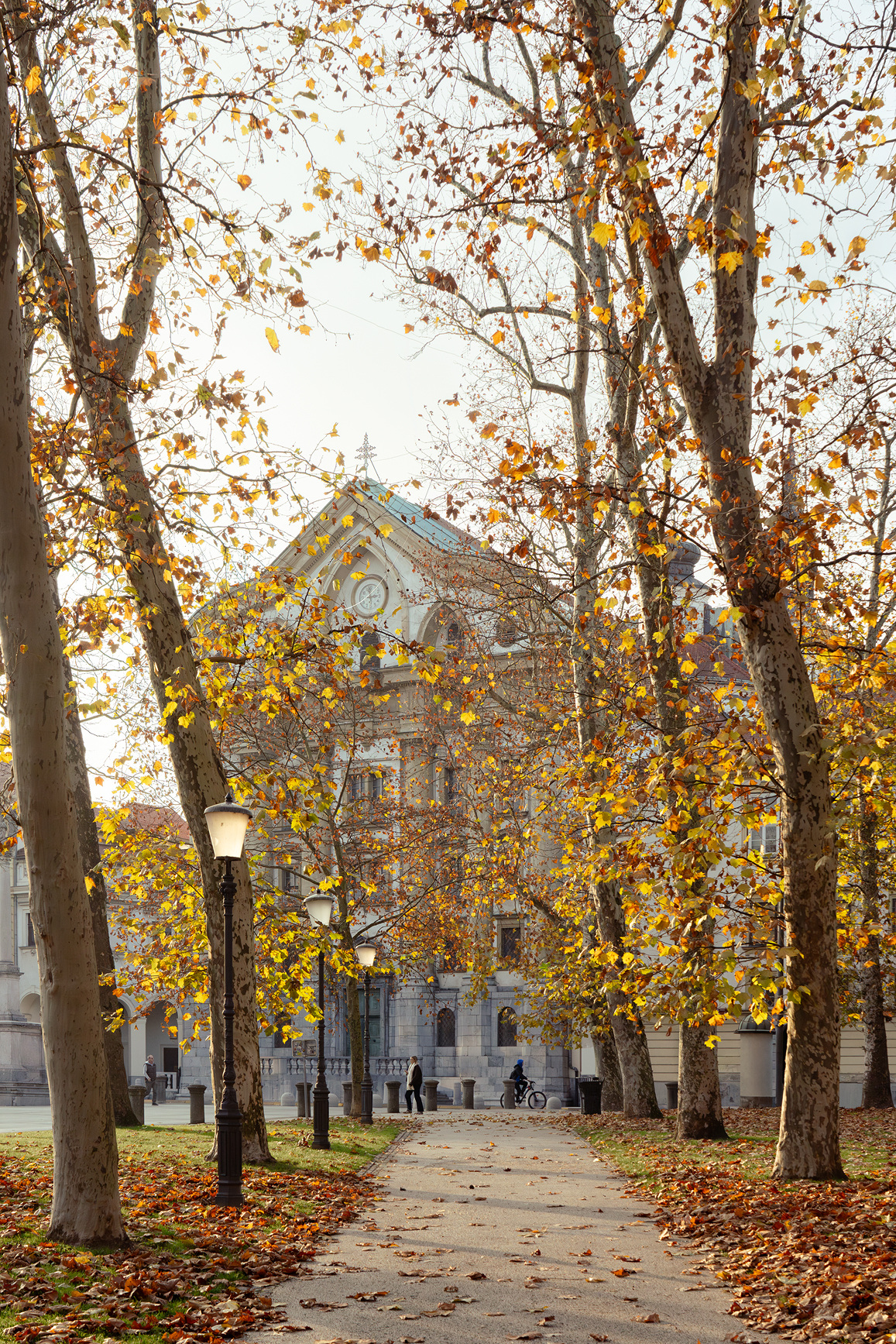
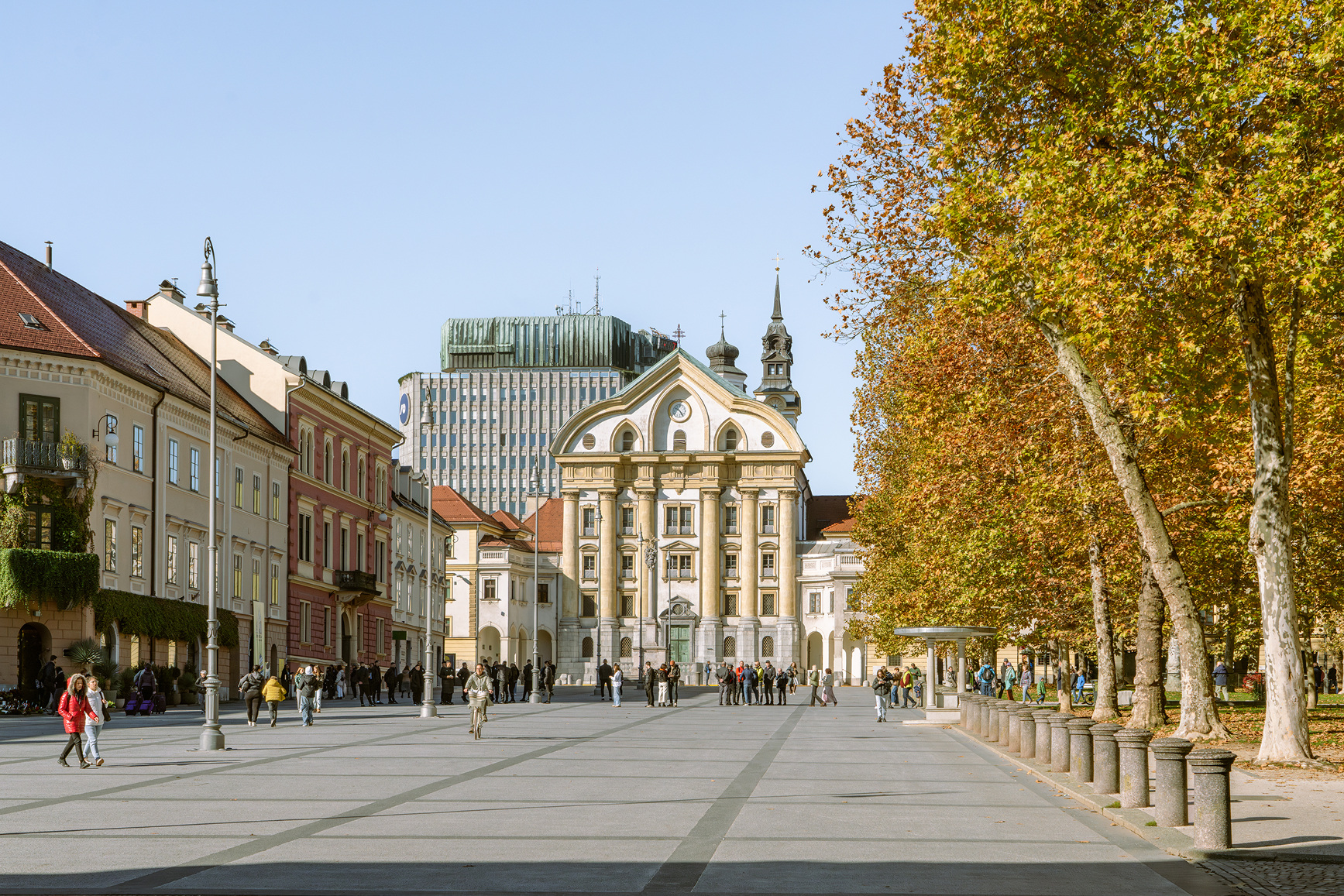
Plečnik paid regard to the previously established space and used his interventions to highlight its character and continuity. He repaved the square with light concrete slabs laid in a geometrical grid and thus rounded up the space, organizing the spatial dominants through axial gestures: he moved the baroque statue of the Holy Trinity to the church axis to give it the central role, and highlighted the axis connecting the church with the Slovene Philharmonic palace and the view of castle in the background with a row of streetlamps. He also replaced the chestnut trees there with plane trees.
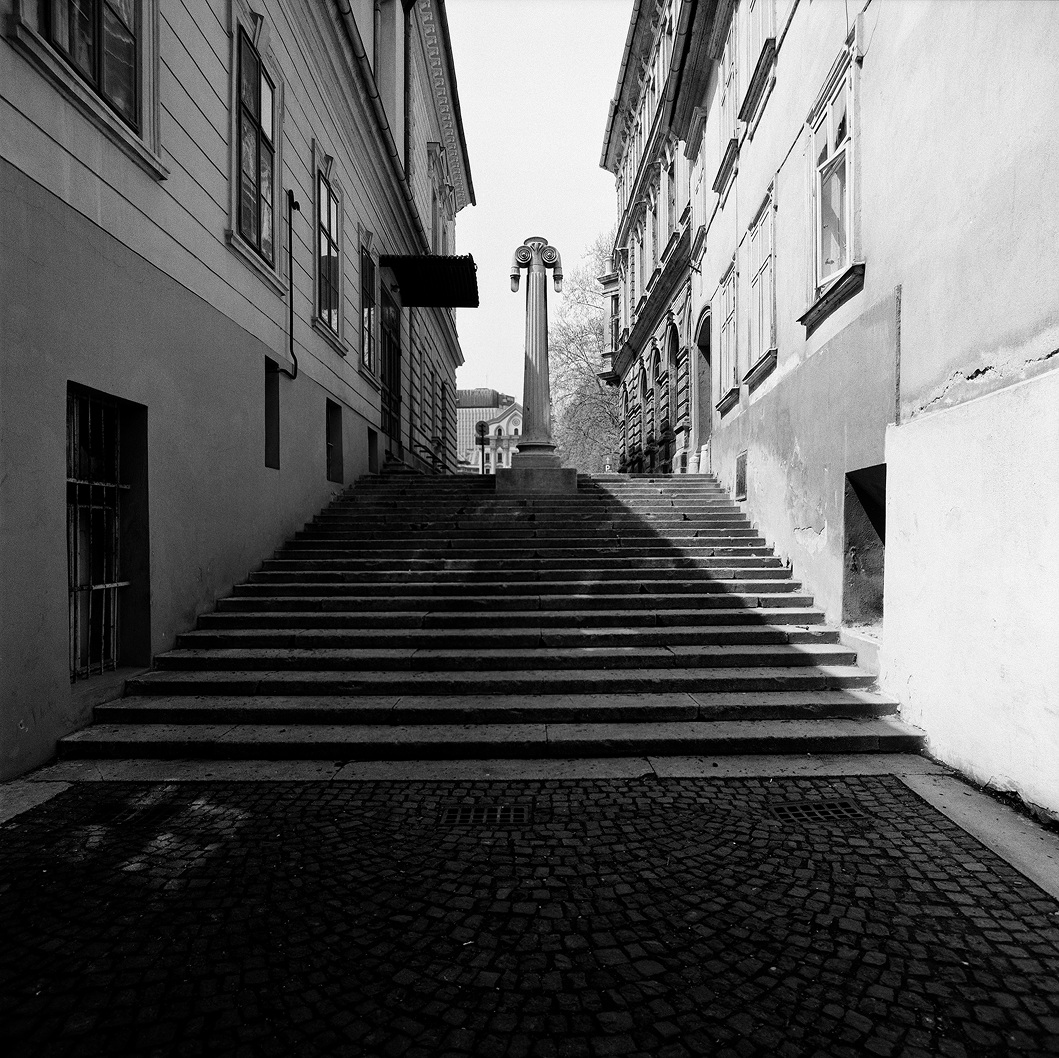
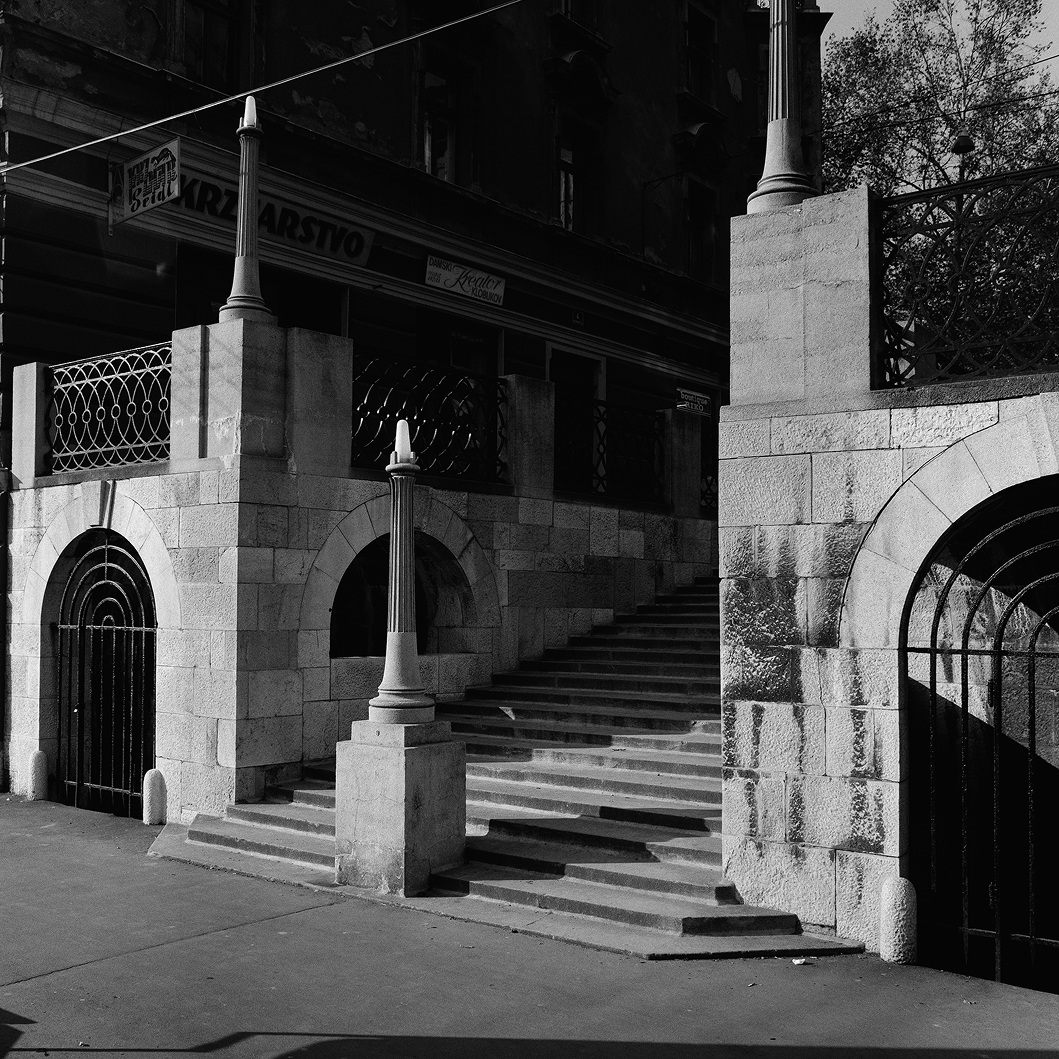
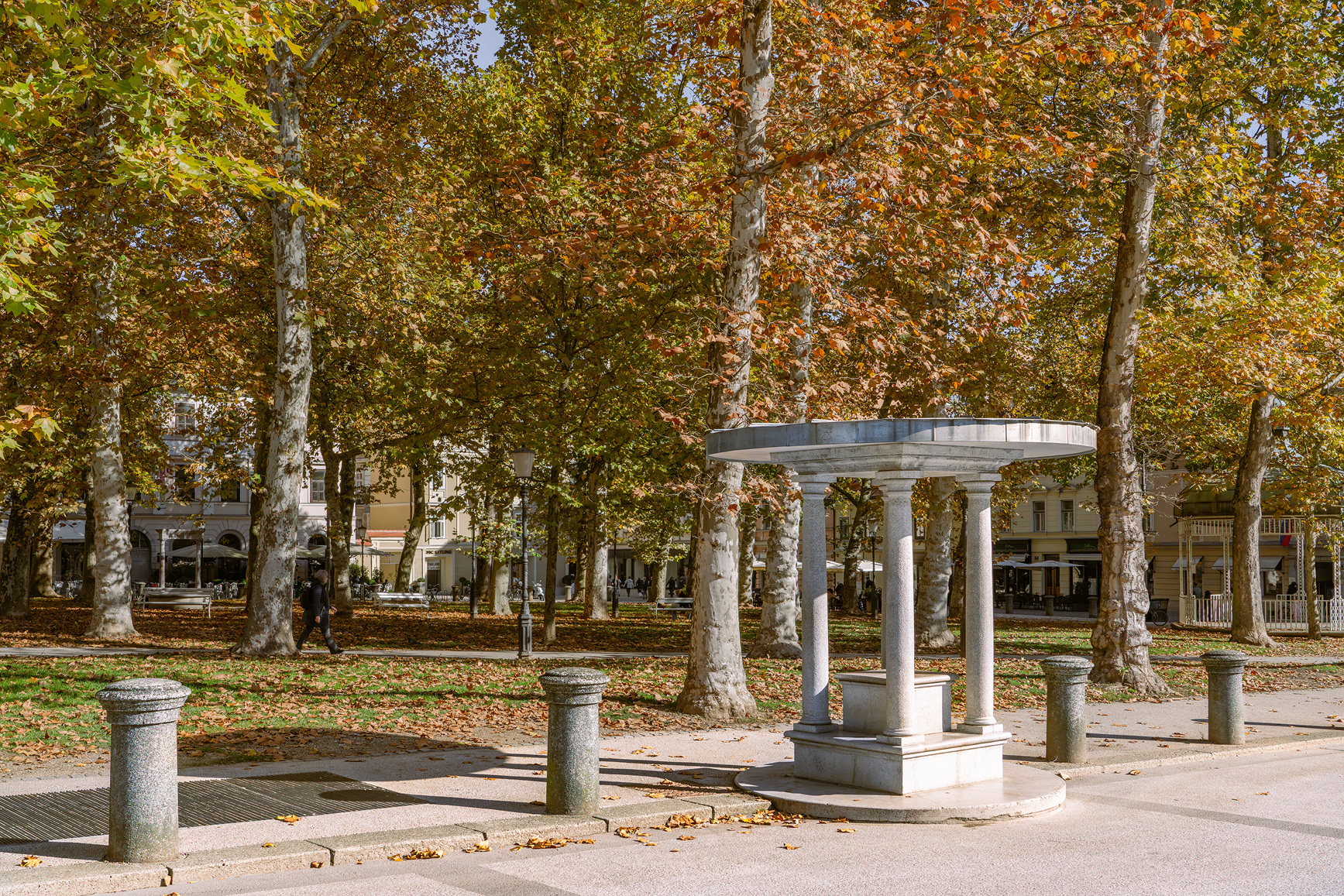
As the great master of small-scale urbanism, Plečnik integrated Congress Square with Zvezda Park into the urban network system; using small, interconnected multi-point interventions he created new connections or accentuated older ones, e.g. the weather house–Illyrian column (connection with Vegova Street), the weather house–theatre staircase, Gerber staircase–diagonal walkway towards the church (connections with the water axis).
1928–1940
The Congress Square and Zvezda Park site was largely shaped in the 19th century, when the site of the former Capuchin monastery was redesigned (the moats backfilled and the Capuchin square extended) in 1821 for the congress of the Holy Alliance, which gave the new square its present-day name. Three years after the congress, a park was laid out on the square, its pathways forming the shape of a star (the Slovenian word for star is zvezda). Prominent buildings line the square and the park, from the baroque Ursuline church of the Holy Trinity to 19th-century palaces (Kazina, the Philharmonic Hall, the Provincial Mansion, and others) that lend the space its characteristic form and character.
Plečnik paid regard to the previously established space and used his interventions to highlight its character and continuity. He repaved the square with light concrete slabs laid in a geometrical grid and thus rounded up the space, organizing the spatial dominants through axial gestures: he moved the baroque statue of the Holy Trinity to the church axis to give it the central role, and highlighted the axis connecting the church with the Slovene Philharmonic palace and the view of castle in the background with a row of streetlamps. He also replaced the chestnut trees there with plane trees.
As the great master of small-scale urbanism, Plečnik integrated Congress Square with Zvezda Park into the urban network system; using small, interconnected multi-point interventions he created new connections or accentuated older ones, e.g. the weather house–Illyrian column (connection with Vegova Street), the weather house–theatre staircase, Gerber staircase–diagonal walkway towards the church (connections with the water axis).
Vegova Street
National and University Library
Congress Square with Zvezda Park