


Roman Walls in Mirje
1928–1938, 1953
The architect saw his intervention into the city as a search for a cultural artefact; a space that grows out of customs, habits, and use, and must – like a human organism – function in harmony with its parts. Rather than searching for a new (revolutionary) model of urban design inspired by modern movements, he sought ways of integrating the old with the new or a way of striking a balance between new urban needs and traditional patterns.
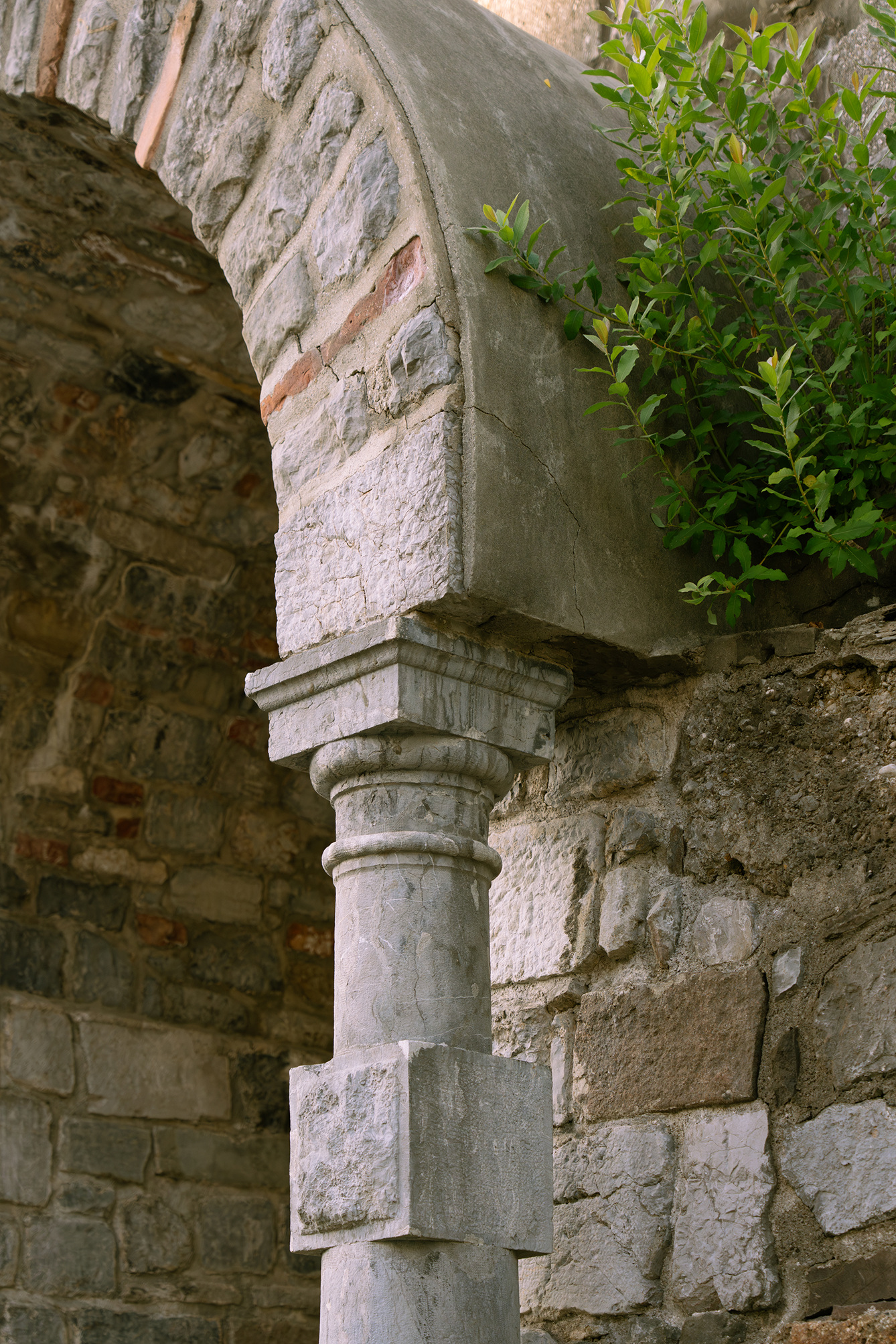
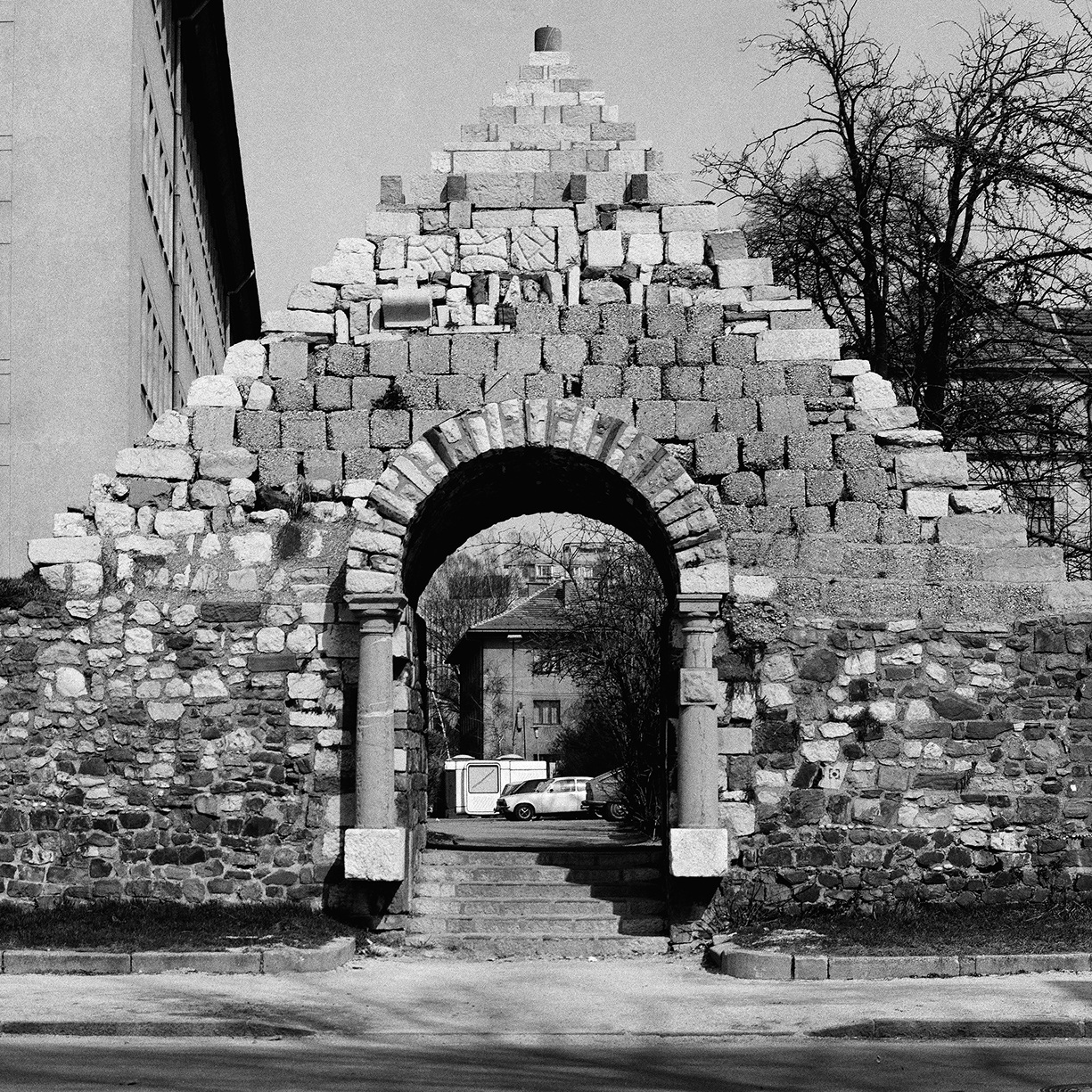
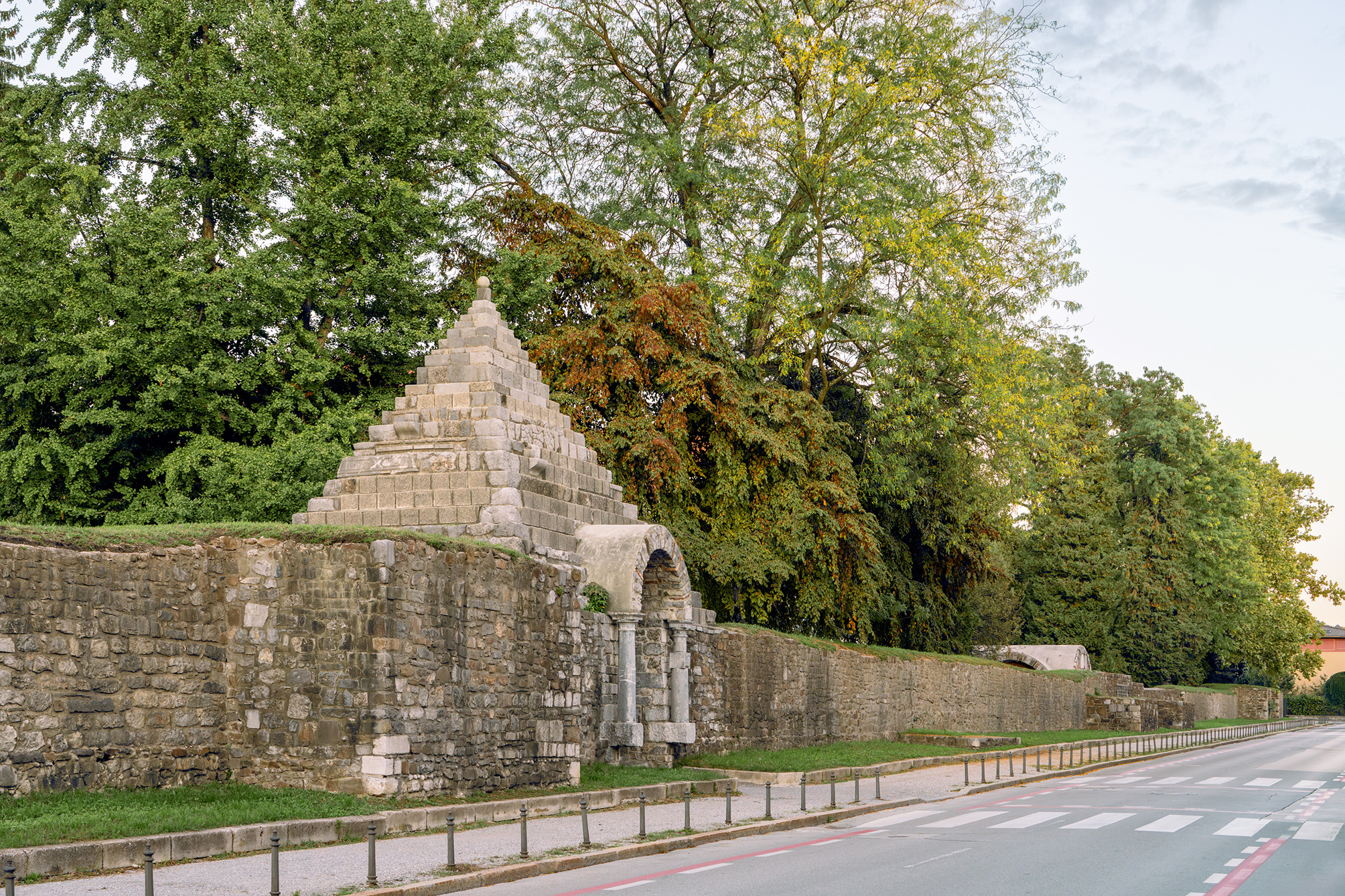
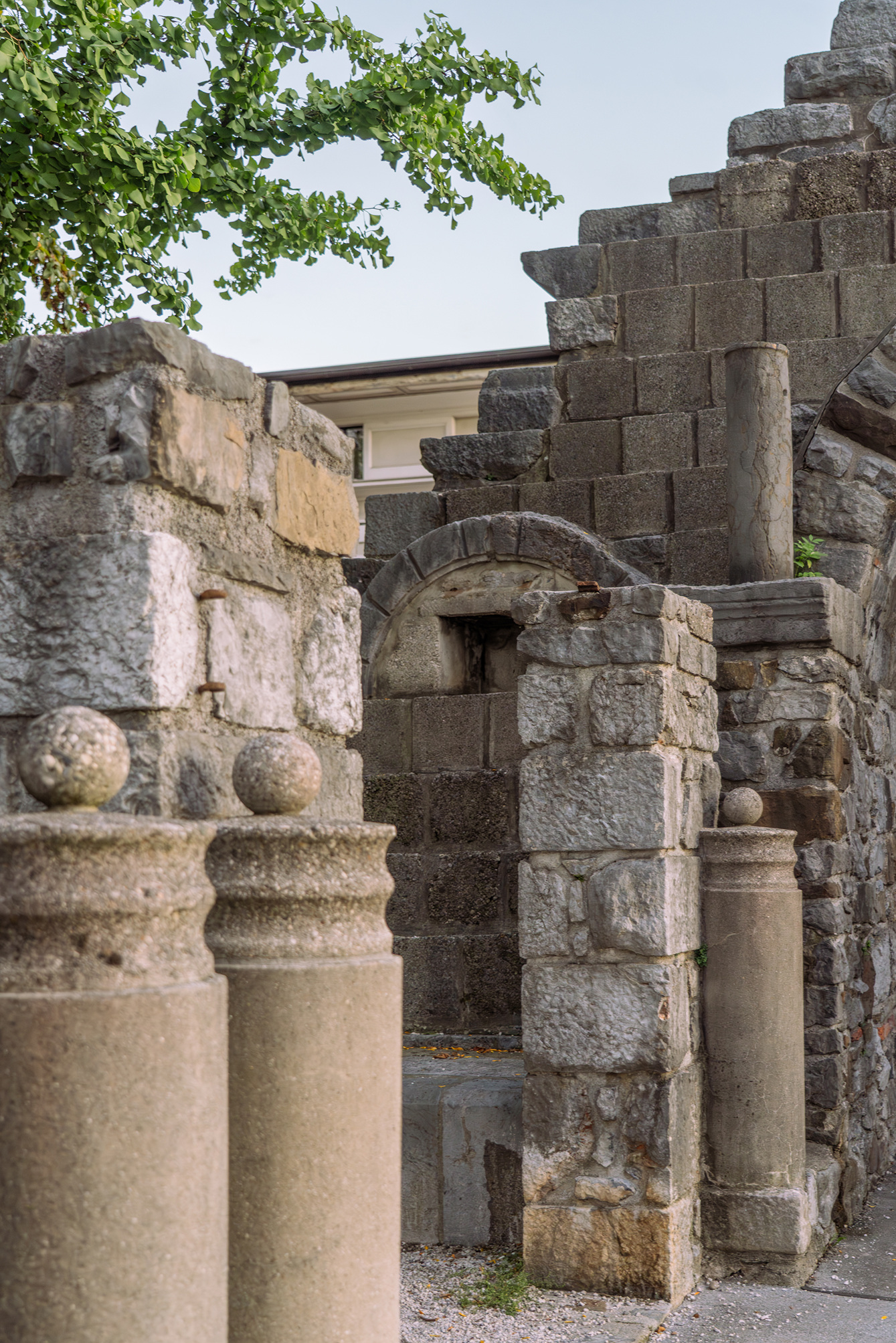
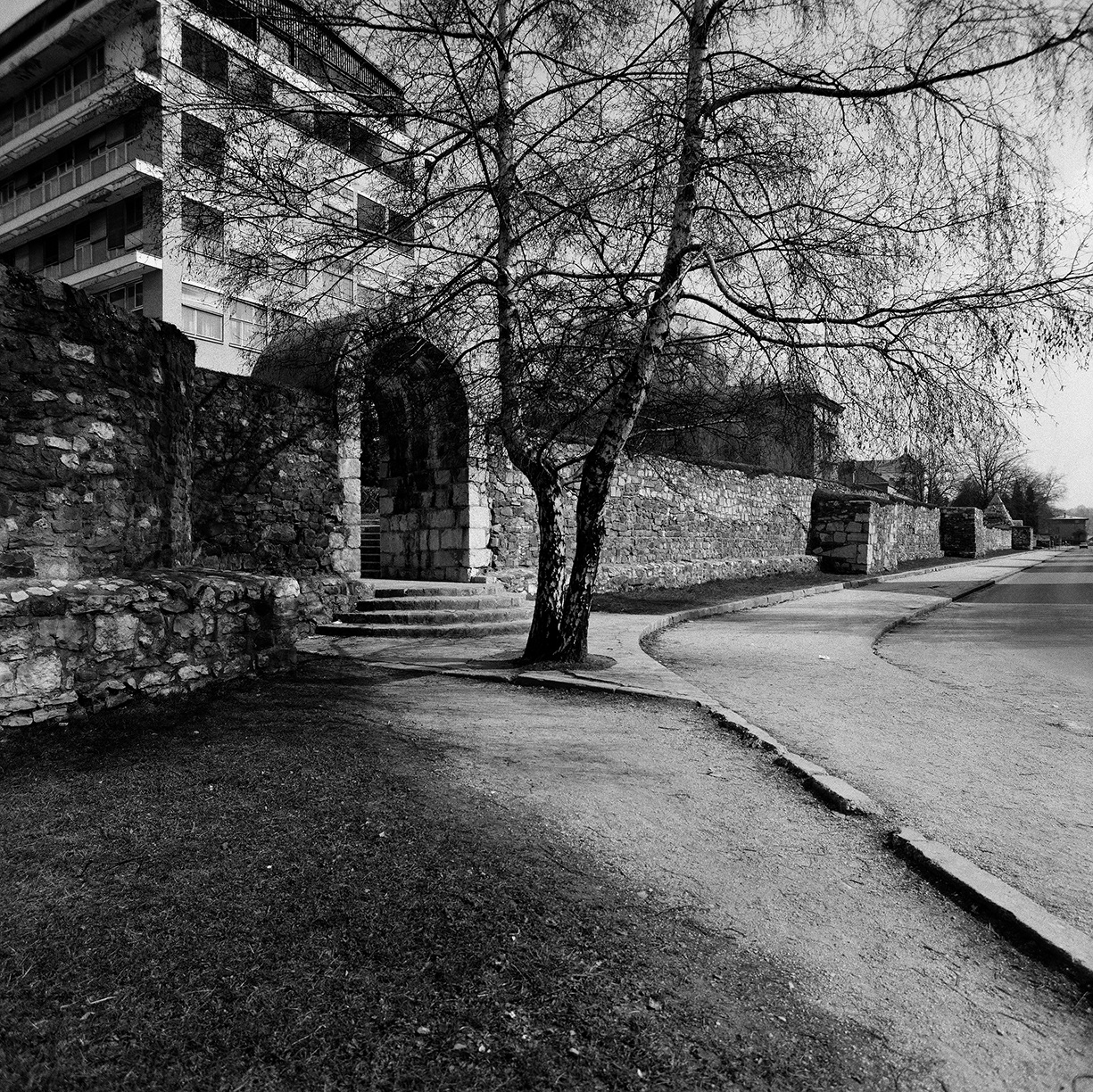
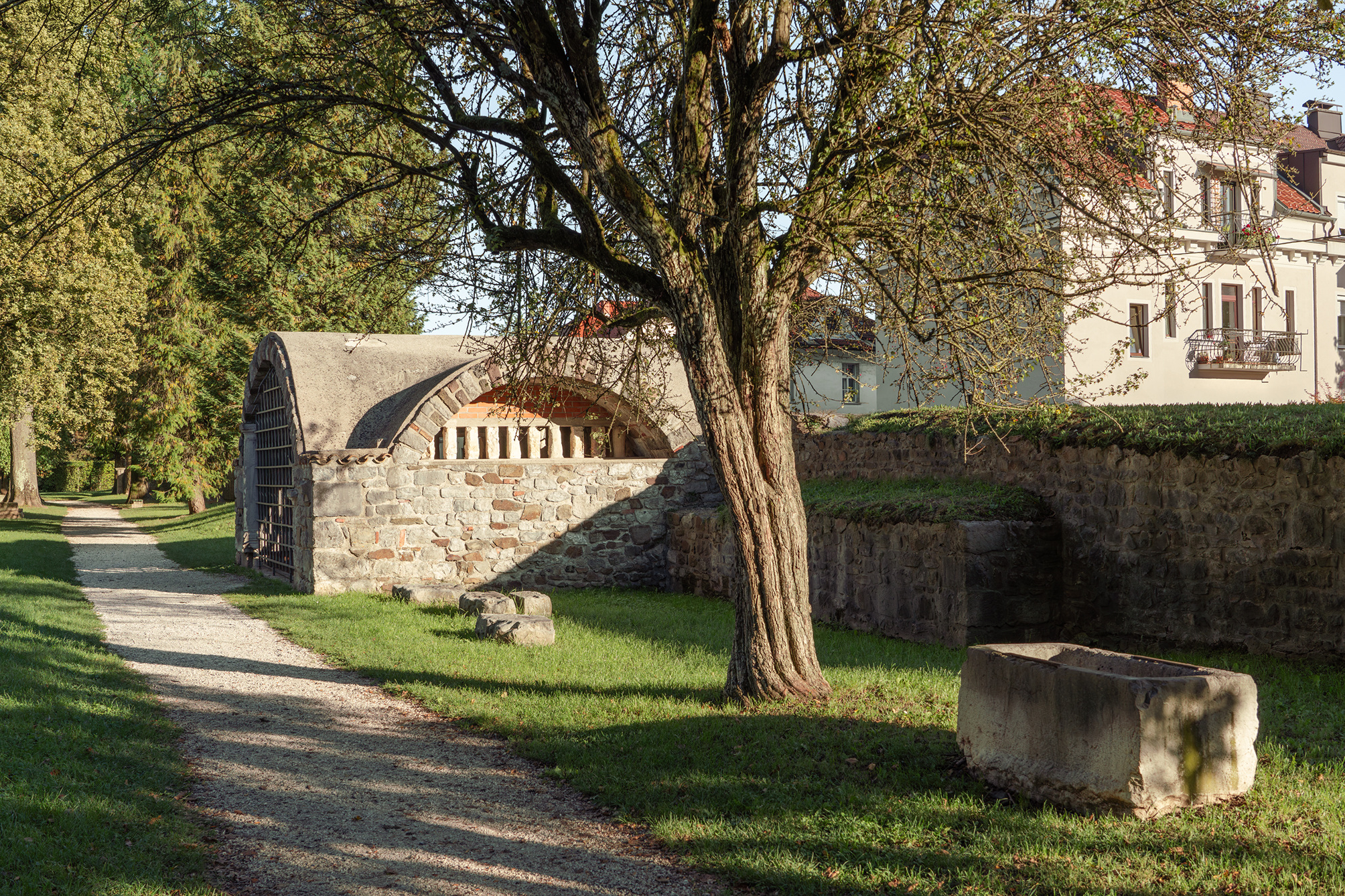
At the time when some called for the removal of the Roman Walls, Plečnik advocated for their restoration. He articulated them with a series of small interventions – a pyramid, a lapidarium, and a reinterpretation of the city gate. He introduced greenery to the site and transformed it into an archaeological park. His interventions evoked the memory of the Roman city map and revealed Ljubljana as a city of many historical layers, embracing both the city’s present day and its monumental past.
Roman Walls in Mirje
1928–1938, 1953
The architect saw his intervention into the city as a search for a cultural artefact; a space that grows out of customs, habits, and use, and must – like a human organism – function in harmony with its parts. Rather than searching for a new (revolutionary) model of urban design inspired by modern movements, he sought ways of integrating the old with the new or a way of striking a balance between new urban needs and traditional patterns.
At the time when some called for the removal of the Roman Walls, Plečnik advocated for their restoration. He articulated them with a series of small interventions – a pyramid, a lapidarium, and a reinterpretation of the city gate. He introduced greenery to the site and transformed it into an archaeological park. His interventions evoked the memory of the Roman city map and revealed Ljubljana as a city of many historical layers, embracing both the city’s present day and its monumental past.